
the Creative Commons Attribution 4.0 License.
the Creative Commons Attribution 4.0 License.
 | 16 Feb 2026
Towards exclusive use of SI units in sensor systems
Joaquín Valdés
Héctor Manuel Laiz
In times of digital transformation, machines are expected to operate exclusively using the International System of Units (SI), something that humans have not yet fully achieved. The same should include sensor systems feeding data to those machines. This requires an internationally authoritative database for converting the non-SI units that humans enter to SI units at the level of the human–machine interface or human–sensor interface.
- Article
(726 KB) - Full-text XML
- BibTeX
- EndNote


On 20 May 2025, the 150th anniversary of the signing of the Metre Convention was celebrated. A scientific International Bureau of Weights and Measures (BIPM) with its headquarters in Paris was set up by the Metre Convention. The BIPM operates under the exclusive supervision of the International Committee for Weights and Measures (CIPM) which itself comes under the authority of the General Conference on Weights and Measures (CGPM). There are currently 64 States Parties to the Metre Convention and 37 Associate States and Economies. At that historic moment, the goal was to ensure standard units accessible to all the people for all time. With that purpose in mind, what we know today as the International System of Units (SI) was being built. The core of the constituent parts of the SI are essentially seven base units, a set of derived units and the SI prefixes. The authoritative document of the SI is the SI Brochure (BIPM, 2019). The SI is the only internationally agreed system of units. It was expected that such a system, which did not belong exclusively to any nation, would be adopted by all. Cumbersome conversions between the many different existing units were gradually being overcome. Despite this great achievement of humanity, not all people currently use only SI units. A relatively small set of non-SI units, which were difficult to stop being used by humans, continued to be accepted for use with the SI. Some of those units were gradually being removed. In addition to this short list, there are still a large number of non-SI units that continue to be customarily used in some contexts and countries. Let us mention some current examples of commercial transactions and industrial applications in non-SI units. Gasoline is sold in US gallons (gal), which differs from the imperial gallon used in the United Kingdom: 1 gal (UK) = 1200 95 gal (US). Motor vehicle efficiency is measured in miles per US gallon in the Unites States and miles per UK gallon in the United Kingdom. In the international petroleum market, prices are given in US dollars per barrel (bbl). The inch (in), foot (ft) and yard (yd) are also used as units of length in several countries. Beer is commonly sold in pints (pt). Food is also sold by the pound (lb). In many countries, tire pressure is measured in pounds per square inch (psi). Energy associated with fuels is expressed in British thermal units (Btu). The units knot and nautical mile, until recently accepted as non-SI units for use with the SI, are still widely used in both aviation and maritime navigation. There are also laws within sovereign states allowing the use of non-SI units alongside the SI. The logic underlying the gradual elimination of some non-SI units from the SI seems to find a limit in few units, such as day, hour and minute, which humans could not stop using because they are so familiar with them. This is an inference based on the common sense of humans. The logic of interaction between machines, however, may be quite different.

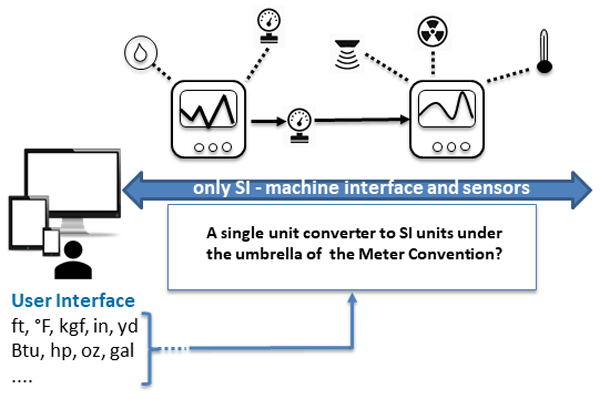
Figure 1Digital SI for future machine-to-machine communication (picture from EMPIR 17IND02 SmartCom).
The coexistence of SI units with non-SI units has been the cause of many important incidents. There are known cases of overweight flights due to ground crew assuming that kilogram weight markings on cargo were pounds, for example, a plane that took off with about half the fuel it should have had because the pilots thought the figure for fuel weight on board was in kilograms when it was really pounds. The most resonant case was that of the Mars Climate Orbiter, NASA's spacecraft, which in 1999 unexpectedly crashed on arrival at its destination due to a mismatch of units. The spacecraft engineers calculated some thrust forces in pound-force (lbf), whereas the team that built the thrusters were expecting a value in newton (N), according to specifications. One solution to these problems is to continue waiting decades until all humans become increasingly familiar with the use of SI units. Another solution would be to force all machines to communicate with each other using only SI units. The latter has been proposed in the project EMPIR 17IND02 (SmartCom) with the participation of several major national metrology institutes, universities and industrial companies, headed by the German Physikalisch-Technische Bundesanstalt.
The SmartCom project started in June 2018 and produced a guide for the exchange of machine-readable data of digital measurement values in a given metadata format (Hutzschenreuter et al., 2019). The fundamental goal of this project is machine communication using only the seven SI-base units. A high level of machine readability of the unit is gained when using only SI-base units and combinations of SI-base units. The so-called platinum quality class in the SmartCom project corresponds to the strongest eligibility for an unambiguous and safe exchange of metrological data in machine communication. Platinum is the purest form of mechanical exchange of metrological data. In addition to the specifications of the seven SI-base units, the specification of the unit “one”, the units “degree”, “minute” and “second” for angles as well as the units “day” and “minute” for quantities of time are permitted in this quality class. This set of units is denoted as “SI units” in the context of the D-SI data model. Figure 1 illustrates the vision of a future where machine-to-machine communication uses only SI units, while humans may still refer at the user interface level to non-SI units.
Digital calibration certificates are one example of the new exchange formats proposed. The electronic transmission of measurement results based on a reference material, or a measurement method, are also under development. The framework proposed for the transmission of metrology data based on the SI will be applicable to all communication networks where metrological data are used. A machine-readable digital version of the SI is the so-called SI Reference Point (SIRP). It is a set of tools designed by the BIPM, with contributions from seconding national metrology institutes, to provide an authoritative digital reference for the current SI. The resource SIRP is currently based on five pillars: units, prefixes, decisions, constants and quantities. It is hoped that it can be inserted into other existing systems for representing units (such as QUDT and unitsML) and used in other services under development. The list of kinds of quantity will gradually be extended to first cover all the quantities included in the BIPM key comparison database (KCDB).
Machine-to-machine communication allows devices to communicate with each other, including usually sensors that provide data over wired or wireless networks. Smart cities, smart homes, smart building, smart health, smart factories and smart industries are being transformed by the integration of the Internet of Things (IoT) providing data collection and analysis. This ecosystem also includes smart objects equipped with sensors, networking and processing technologies (Zeng et al., 2024). In a future where machines operate using only SI units, we can imagine that networked sensors recording all aspects of the production processes will also have to be adapted to meet those requirements, transmitting data using only SI units.

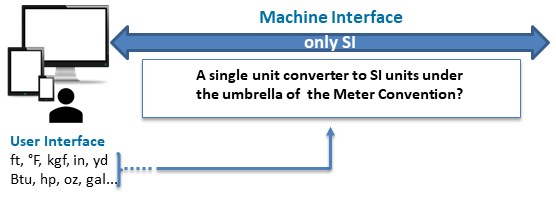
Figure 3Need for a single unit converter to SI units for machine-to-machine communication, including sensor systems.
The General Conference on Weights and Measures (CGPM) promotes initiatives to ensure that the Metre Convention naturally extends its role as the globally accepted anchor of trust for metrology into the digital era, including questions of sensor and sensor networks (BIPM, 2022a). In 2019, the International Committee for Weights and Measures decided to establish a CIPM Task Group on the digital SI to explore and establish suitable liaisons with all relevant stakeholders, aiming at agreeing an authoritative document on a metadata format for SI-based data transfer, as well as for a machine-interpretable unambiguous digital representation of metrological information and factual data in general (CIPM, 2019). In 2023, the CIPM approved the establishment of a forum on metrology in the digital world, noted the draft mission and structure proposed by the CIPM Task Group on the SI Digital Framework and adopted the updated “Grand Vision for the SI Digital Framework” (CIPM, 2023). This last document includes among its long-term objectives the following: “Embedding the SI Digital Framework in cyber-physical systems, e.g. sensor networks, Internet of Things environments, autonomous systems, and establishing metrological traceability at point of measurement”. This forum, finally called Forum on Metrology and Digitalization (FORUM-MD), had its first meeting in March 2024. Throughout the report of that meeting, several challenges regarding smart sensor networks metrology were mentioned (BIPM, 2024). A Discussion Group on Sensor Networks has been created to advise the FORUM-MD on matters relating to metrology for sensor networks.
A digital representation of units of measurement should cover the whole necessary metrological information in a machine-readable format, enabling accurate and unambiguous data interoperability and analysis. A periodically updated inventory of digital projects focused on the digital representation of units of measurement is provided by the Committee on Data of the International Science Council (CODATA) Task Group Digital Representation of Units of Measurement (DRUM) (CODATA, 2024). The technical requirements for detecting the origin of the data, the units associated with the incoming data, conversion and validation modules, their language and format – so as automation of the workflow – may improve over time (Valdés, 2025). The uniqueness of unit conversions with reference to the SI requires that a database of conversion factors be internationally agreed between states and then periodically updated with international agreement. In this regard, the information provided by the NIST “Guide for the Use of the SI” and the ISO/IEC 80000 series of standards would gain internationally authoritative status if it were approved by the CGPM and made official on the BIPM website under the umbrella of the Meter Convention. This is a matter requiring international acceptance, that could in principle be considered in the CIPM task of developing an SI Digital Framework. In this regard, participation of the signatory organizations of the “Joint Statement of Intent on the digital transformation in the international scientific and quality infrastructure” would also be very beneficial (BIPM, 2022b). This document has been signed by many other organizations besides the BIPM. There is already longstanding formal cooperation between BIPM/CIPM, with several of those organizations as members of the Joint Committee for Guides in Metrology.
We have recently proposed the inclusion on the BIPM website of the conversion factors to the seven SI-base units of most of the non-SI units used worldwide for machine-to-machine communication (Valdés and Laiz, 2025). It seems then very feasible that scientific efforts among the signatory organizations of the aforementioned Join Statement will continue, aiming at the inclusion of a conversion factors database in a possible international agreement between states participating in the decision-making bodies of the Metre Convention (Fig. 2).
As explained in Sect. 3, smart sensors and sensor networks are part of the emerging features in the new digital metrology.
In conclusion, the proposal to consider a single authoritative database of unit conversion factors at the highest decision-making level in the field of metrology could then be applicable to machine-to-machine communication, including sensor systems (Fig. 3).
No data were generated or used in this study.
JV and HML contributed equally to this work.
The contact author has declared that neither of the authors has any competing interests.
Publisher's note: Copernicus Publications remains neutral with regard to jurisdictional claims made in the text, published maps, institutional affiliations, or any other geographical representation in this paper. The authors bear the ultimate responsibility for providing appropriate place names. Views expressed in the text are those of the authors and do not necessarily reflect the views of the publisher.
This article is part of the special issue “Sensors and Measurement Science International SMSI 2025”. It is a result of the 2025 Sensor and Measurement Science International (SMSI) Conference, Nuremberg, Germany, 6–8 May 2025.
This paper was edited by Thomas Fröhlich and reviewed by two anonymous referees.
BIPM: SI Brochure. The International System of Units (SI), 9th edn. 2019 (revised in August 2025), International Bureau of Weights and Measures, https://doi.org/10.59161/AUEZ1291, 2019.
BIPM: General Conference on Weights and Measures: 27th meeting of the CGPM – Proceedings (15–18 November 2022), https://www.bipm.org/documents/20126/234853367/CGPM2022/db61a371-f046-c7b4-a860-80bb798096b6 (last access: 12 December 2025), 2022a.
BIPM: Joint Statement of Intent: On the digital transformation in the international scientific and quality infrastructure, Joint Statement of Intent – Digital Transformation, 30 March 2022, International Bureau of Weights and Measures, https://www.bipm.org/en/liaison/digital-transformation (last access: 12 December 2025), 2022b.
BIPM: Forum on Metrology and Digitalization (FORUM-MD): Report of the 1st meeting (7–8 March 2024) to the International Committee for Weights and Measures, International Bureau of Weights and Measures, https://www.bipm.org/en/committees/fo/forum-md/publications (last access: 12 December 2025), 2024.
CIPM: Decision CIPM/108-28, International Bureau of Weights and Measures, https://www.bipm.org/en/committees/ci/cipm/outcomes (last access: 12 December 2025), 2019.
CIPM: Decision CIPM/112-12, International Bureau of Weights and Measures, https://www.bipm.org/en/committees/ci/cipm/outcomes (last access: 12 December 2025), 2023.
CODATA: The Digital Units Representation Inventory, CODATA (Committee on Data of the International Science Council, ISC), https://codata.org/initiatives/task-groups/drum/the-digital-unit-representation-inventory/ (last access: 12 December 2025), 2024.
Hutzschenreuter, D., Härtig, F., Wiebke, H., Wiedenhöfer, T., Forbes, A., Brown, C., Smith, I., Rhodes, S., Linkeová, I., Sýkora, J., Zelený, V., Ačko, B., Klobučar, R., Nikander, P., Elo, T., Mustapää, T., Kuosmanen, P. M., Maennel, O., Hovhannisyan, K., Müller, B., Heindorf, L., and Paciello, V.: SmartCom Digital System of Units (D-SI), Guide for the use of the metadata-format used in metrology for the easy-to-use, safe, harmonised and unambiguous digital transfer of metrological data (D-SI 1.3), Zenodo, https://doi.org/10.5281/zenodo.3522631, 2019.
Valdés, J.: Stop ignoring units outside the SI, in: Sensor and Measurement Science International SMSI-2025 (325–326), https://doi.org/10.5162/SMSI2025/P47, 2025.
Valdés, J. and Laiz, H. M.: An SI for humans and a digital SI for machines, Metrologia, 62, 1–5, https://doi.org/10.1088/1681-7575/ad94f8, 2025.
Zeng, F., Pang, C. and Tang, H.: Sensors on Internet of Things Systems for the Sustainable Development of Smart Cities: A Systematic Literature Review, Sensors, 24, https://doi.org/10.3390/s24072074, 2024..
- Abstract
- Non-SI units accepted and not accepted for use with the SI
- Machines operating exclusively with SI units
- Sensor systems operating exclusively with SI units
- A single authoritative unit conversion factors database for machine-to-machine communication including sensors
- Data availability
- Author contributions
- Competing interests
- Disclaimer
- Special issue statement
- Review statement
- References
- Abstract
- Non-SI units accepted and not accepted for use with the SI
- Machines operating exclusively with SI units
- Sensor systems operating exclusively with SI units
- A single authoritative unit conversion factors database for machine-to-machine communication including sensors
- Data availability
- Author contributions
- Competing interests
- Disclaimer
- Special issue statement
- Review statement
- References