
the Creative Commons Attribution 4.0 License.
the Creative Commons Attribution 4.0 License.
 | 11 Nov 2026
Multiplex measurement system for the detection of nutrients in hydroponics using ion-selective electrodes
Thomas Klotzbücher

Susanne Sigloch
Juri Magomajew
Knut Welzel
Julian Höth
Rainer Gransee
Vishal G. Warke
Mrunal Saste
Vikas Randhe
Manish Raut
Uday Annapure
Girish B. Mahajan
This paper presents a microfluidic-cartridge-based measurement technology utilizing miniaturized solid-contact liquid membrane ion-selective electrodes (ISEs) for application in hydroponics. The ion-selective electrodes are integrated on printed circuit boards (PCBs) for direct potentiometric analysis of various ions in aqueous solutions. The electrodes are fabricated on top of the PCBs gold electrodes, creating double-layer films, comprising an ion-to-electron conversion layer and a polyvinylchloride (PVC) layer, containing a specific ionophore for target ion detection. A microfluidic cartridge is affixed to the electronic board, facilitating the fluidic connection of hydroponic solutions to the different electrodes. This approach minimizes sample volume, reduces waste, and enables a compact setup that is ideal for on-site deployment in hydroponic systems. Within qualification in the laboratory, a total recovery of 96.9 % (potassium), 90.6 % (hydrogen phosphate), 83.3 % (ammonium), 92.7 % (nitrate), and 92.7 % (calcium), with corresponding mean errors of 7.8 % (potassium), 4.4 % (hydrogen phosphate), 4.2 % (ammonium), 5.5 % (nitrate), and 16.0 % (calcium), could be achieved. For the first time, it could be shown that our system allows on-site measurements within a hydroponic greenhouse, with excellent correlation of the expected values for ammonium, nitrate, calcium, potassium, and (hydrogen)phosphate concentrations.
- Article
(3721 KB) - Full-text XML
-
Supplement
(1068 KB) - BibTeX
- EndNote


As global populations continue to rise, the demand for sustainable agricultural practices has never been more critical. A vertical farming system utilizing hydroponics is an innovative agricultural approach that maximizes space by growing crops in stacked layers. Nutrient-rich water solutions are recirculated in a closed-loop system while being constantly delivered to the plant roots, eliminating the need for soil. Hydroponic systems offer a viable alternative to traditional farming methods, particularly in regions facing land scarcity, water shortages, and the challenges posed by climate change. Unlike classical farming, which relies heavily on arable land and can lead to soil degradation, hydroponics enables crop production in urban environments and areas with poor soil quality (Kozai et al., 2016). Moreover, hydroponics can significantly reduce water consumption (by up to 90 % compared to conventional agriculture) while also minimizing the need for pesticides, thereby promoting an eco-friendlier approach to food production (Fathidarehnijeh et al., 2023). The ability to control environmental parameters in hydroponic systems leads to enhanced crop yields and shorter growth cycles, making it a more efficient option for meeting food security demands (Verma et al., 2025). As such, advancing hydroponic technologies and their implementation could play a crucial role in ensuring sustainable food production in the face of increasing global challenges. Despite the numerous advantages of hydroponics, several challenges persist that can hinder its widespread adoption and efficiency. One significant issue is the high initial setup costs, which can be prohibitive for small-scale farmers or new entrants to the agricultural sector (Mishra et al., 2024). Additionally, reliance on technology and precise monitoring can lead to operational complexities, requiring skilled personnel to manage systems effectively (Ahmed et al., 2025). A critical challenge lies in nutrient management, where only pH and electrical conductivity (EC) are measured to assess nutrient availability, particularly in closed-loop hydroponic systems. This creates an imbalance because EC does not provide sufficient information regarding the availability of nutrient ions (Cho et al., 2018). Nutrient ion availability depends on plant uptake, and not all nutrients are absorbed by the plants in the same ratio, creating an imbalance. These ionic imbalances can rapidly affect plant health and yield, necessitating careful monitoring and adjustments to ensure optimal nutrient levels (Son et al., 2020). Improper nutrient management can lead to deficiencies or toxicities, which not only impact crop quality but can also diminish the overall efficiency of the hydroponic system. Addressing these nutrient management challenges is essential for maximizing the potential of hydroponics and ensuring its viability as a sustainable agricultural solution. Monitoring nutrient solutions in hydroponic systems is critical for ensuring optimal plant growth and yield. Advanced sensor technologies are increasingly employed to provide real-time data on key parameters such as pH, EC, and nutrient concentration (Gang et al., 2025; Milião, 2026; Zhai et al., 2024; Sengupta et al., 2025). These sensors enable precise monitoring of the nutrient solution's composition, allowing for immediate adjustments to maintain ideal conditions. Automated systems can be integrated with software platforms to analyze data and generate alerts for any imbalances or deficiencies, facilitating timely interventions (Jaworska et al., 2026). Additionally, some systems utilize machine learning algorithms to predict nutrient needs based on plant growth stages and environmental conditions, optimizing resource use and minimizing waste. A study developed an Internet of Things (IoT)-based multi-ion cyber monitoring system that measures K+, NH, and NO in real time to assess their concentrations and nutrient status, thereby enabling data-driven decisions and precision hydroponics (Wu et al., 2023). Similarly, another study implemented AI with IoT that uses Raspberry Pi to control and integrate environment monitoring sensors to monitor plant statistics, to provide alerts to farmers, and to supply nutrients in an automated mode based on requirements (Ramakrishnam Raju et al., 2022). Furthermore, a multi-ion monitoring system based on the RGB sensor's proximal absorbance was developed to measure the concentrations of NO, HnPO, K+, Ca2+, and Mg2+ (Lee et al., 2024). Zn nanorod field effect transistor arrays were also used to detect PO, NO, and K+ ion concentrations (Bhat et al., 2021). Laser-induced breakdown spectroscopy (LIBS) was also employed to measure K+, Na+, Ca2+, and Mg2+ for rapid, on-site, precise, real-time monitoring (Lim, 2024). As monitoring technology continues to evolve, the integration of AI and IoT devices further enhances connectivity and data sharing, paving the way for more efficient and sustainable hydroponic farming practices (Wu et al., 2023).
Thus, there is a need for new and affordable sensor concepts allowing the enhancement of the current situation. Ion-selective electrodes (ISEs) have emerged as essential tools in hydroponic systems for monitoring nutrient concentrations, providing significant advantages over traditional measurement methods such as conductivity and pH (Jung et al., 2020). Current state-of-the-art ISEs enable the precise measurement of specific ions, including ammonium, nitrate, calcium, potassium, and hydrogen phosphate, thereby allowing growers to optimize nutrient delivery tailored to the specific needs of various crops (Fathidarehnijeh et al., 2023). These electrodes often utilize solid-contact designs that enhance response times and minimize sample volumes, contributing to more accurate and timely nutrient management (Verma et al., 2025). However, conventional ISE systems can be bulky and may require frequent maintenance, leading to challenges related to cross-sensitivity and calibration (Shao et al., 2020).
In contrast, our microfluidic-cartridge-based sensor platform represents a significant advancement by integrating miniaturized solid-contact ISEs directly onto an electronic board. This approach can potentially reduce the physical footprint and enable a more compact and efficient setup suitable for on-site installation in hydroponic facilities. The microfluidic cartridge facilitates precise control of fluid flow, resulting in minimized sample volumes and reduced waste generation. This innovative approach not only enhances measurement accuracy but also allows for real-time monitoring of multiple ions simultaneously, addressing a critical limitation of existing methods (Ahmed et al., 2025). Therefore, the system's design offers greater insights into nutrient dynamics and enables proactive adjustments to nutrient concentrations while automatically replenishing nutrients being metabolized by the growing plants. Our work is focused on solid-contact liquid-membrane electrodes, containing an ionophore in a polymer membrane that will allow the specific permeation of only one ion type. This work describes the design of an automated sensor system for different ion types, namely potassium, calcium, ammonium, nitrate, and hydrogen phosphate (K+, Ca2+, NH, NO and HPO), and its use measuring real-world samples (from vertical-farming greenhouses). Overall, our system aims to optimize nutrient management in vertical farming, promoting environmental sustainability while ensuring healthy plant growth.
The microfluidic measuring system is a hybrid solution, consisting of several electronic printed circuit boards (PCBs) with gold electrodes that are functionalized with ISEs and a polymer microfluidic cartridge that is mounted on top of the PCBs (Fig. 1). The PCBs were designed in-house, using Ultiboard (from National Instruments), and fabricated by BETA Layout GmbH using a four-layer design with incorporated gold tracks and gold-covered electrode pads. The round electrode pads have a diameter of 5 mm and are connected via conducting paths and further on via coaxial cables with a analog–digital-converter electronics and a microprocessor for data acquisition, calibration, and display and for controlling the electromechanical components (assembled and provided by the consortium partner RM Geraetebau, Reinheim).
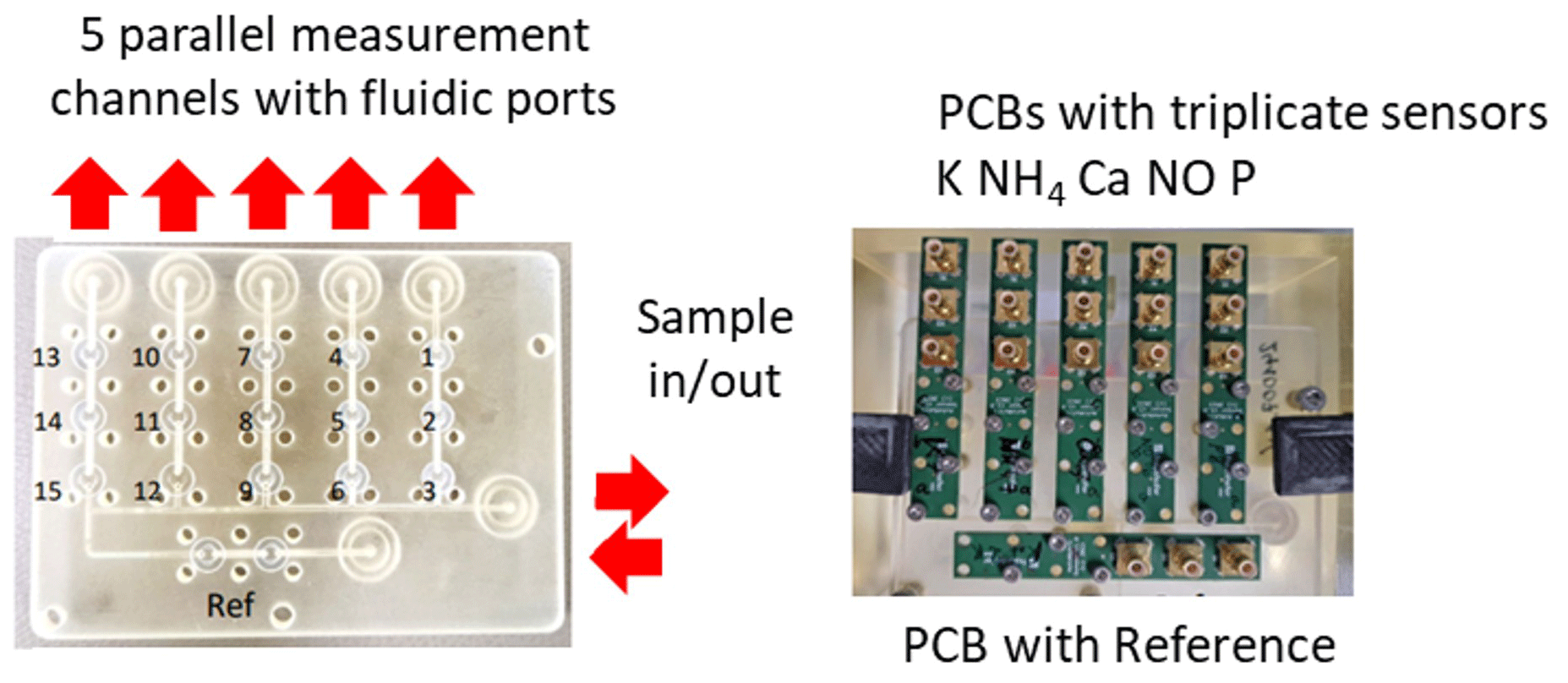
Figure 1Microfluidic cartridge (85 × 62.5 mm2), made by means of 3D printing, combined with six PCBs (60 × 9.5 mm2), functionalized with three ion-selective electrodes each.
The polymer cartridge was fabricated by means of 3D printing using a Keyence Agilista 3200 printer resin, incorporating microfluidic channels, connections to the attached PCBs (sealed via O rings), and an inlet, as well as several parallel outlets. More information can be found in our previous publication and on our website (Klotzbücher et al., 2023; Fraunhofer IMM, 2026). The polymer microfluidic cartridge has a size of 60 × 40 mm2 and contains five parallel outlet channels, with a PCB with three identical electrodes connected to each, each allowing the measurement of one ion type. The three redundant electrodes allow for a more reliable measurement since the probability of electrode failure is reduced and the best-performing electrode can be chosen to get higher accuracy during the measurement. On top of the feeding channel, which connects the electrodes, the reference electrode PCB is located.
The reference electrode consists of a gold electrode, coated with a double layer of , using electroplating, and a PVC membrane containing KCl salt as a chlorine ion source, dispensed in the same way as membranes of the ISEs. The liquids (aqueous solutions of different ion concentrations) are driven through the system via peristaltic pumps SR10/30 (24 V low-cost DC) from Metzger Technik. The incorporated -way valves (LVM10R6-5A-Q/00420135 from SMC pneumatics) allow the selection of specific flow paths (and the flushing of the chosen electrode row). Flow control of corresponding liquids was achieved using tube light barriers BE-A301 from Panasonic. After passing the microfluidic cartridge with the respective ISEs, the aqueous solution is pumped into a waste. A schematic of the setup and the setup itself are given in Fig. 2.
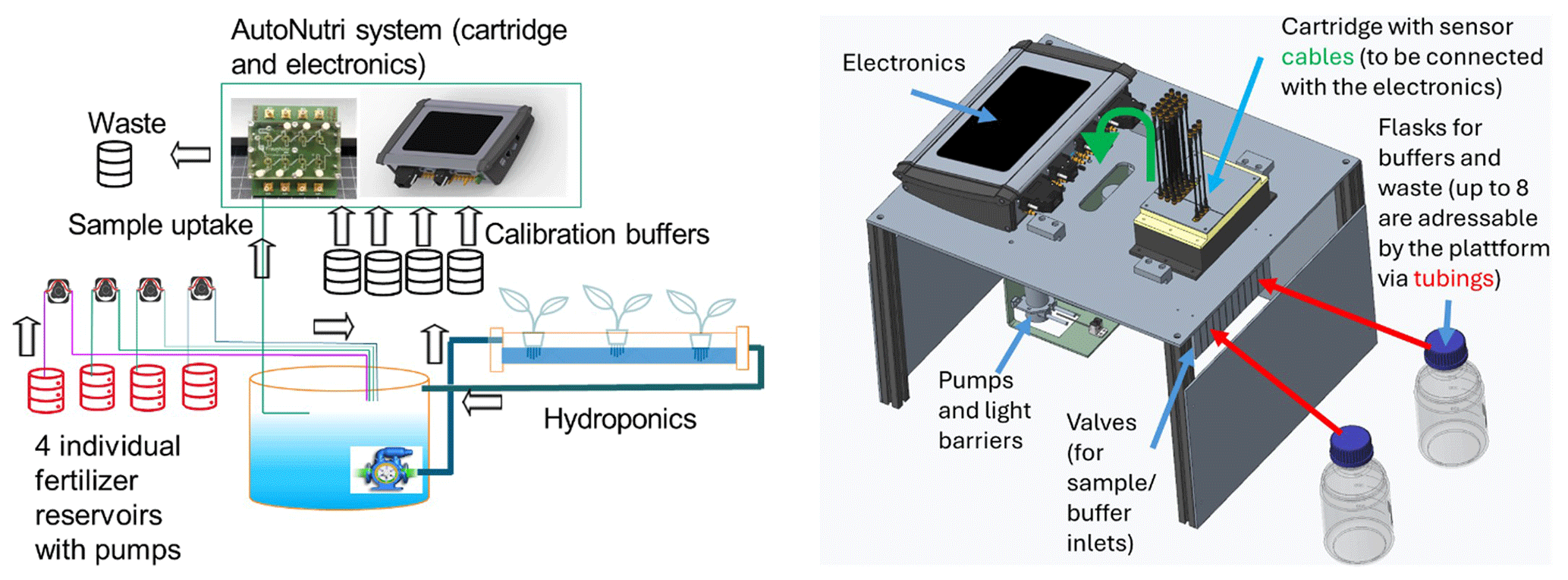
Figure 2Schematic of the AutoNutri microfluidic flow system and the AutoNutri measuring device.
3.1 Preparation of ion-selective electrodes
Each ISE consists of two layers that are coated on top of the gold electrodes of the PCB. The first layer is made of Poly-3,4-ethylendioxythiophen (PEDOT) and was coated via electroplating (30 mA cm−2, 15 s), using the monomer EDOT, stabilized with PSS (Polystyrenesulfonate). The negatively charged sulfonate group serves as an anion for the positively charged PEDOT, thereby stabilizing the polymer layer (Bobacka, 1999). The PEDOT:PSS serves as an ion-to-electron conversion layer, is electrically conductive, stabilizes the charge transfer, lowers contact resistance, and reduces signal drift so that an optimal interface between the ion-selective layer and the electrical conductor is formed. The ISE membranes for K+ were prepared in-house, whereas for the other ions, commercially available ionophore solutions from Aptisens Ltd., Wolverhampton membranes were used. For the preparation of the K+-membrane solutions, the amounts given in Table 1 were weighed in and dissolved with 1.5 to 2 mL tetrahydrofurane (THF) while stirring at 65 °C.
Table 1Ingredients of the K+ membranes, dissolved in 2 mL THF.
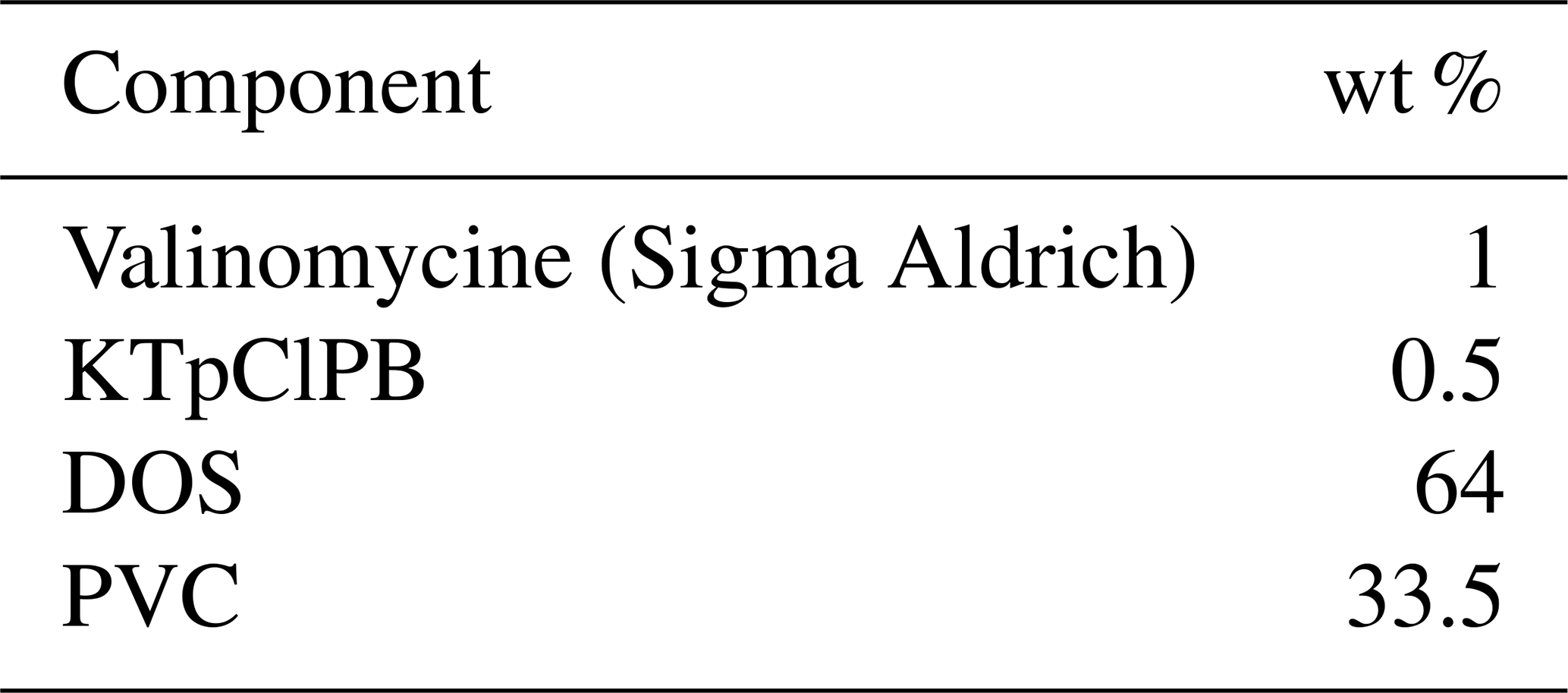
The polyvinylchloride (PVC) membrane contains the softener Bis-(2-ethylhexyl)-sebakat (DOS), which serves as an organic solvent for the ionophore (Valinomycine) of the K+-selective membranes. Additionally, a conducting salt is used, namely potassium-tetrakis(4-chlorophenyl)-borate (KTpClPB), for K+ membranes (Table 1). The organic phase is mechanically stabilized by the PVC. The exact composition of the ionophore solutions purchased from Aptisens was not known. A total of 10 to 15 µL of the membrane solvent was deposited on the electrodes by a micro-titer pipette. After about 24 h the drop-casted THF had evaporated from the membrane layer, and the ion-selective electrode was ready for use. Referring the total mass of dissolved components to the density of the solid material delivers the total volume of the membrane material that covers an electrode with an area of 19.64 mm2 (5 mm diameter), leading to a membrane film thickness of 54 to 81 µm (10 to 15 µL). Before usage, the ISEs were conditioned for 24 h in a solution with a low concentration of the analyte ion.
3.2 Measuring setup and procedure
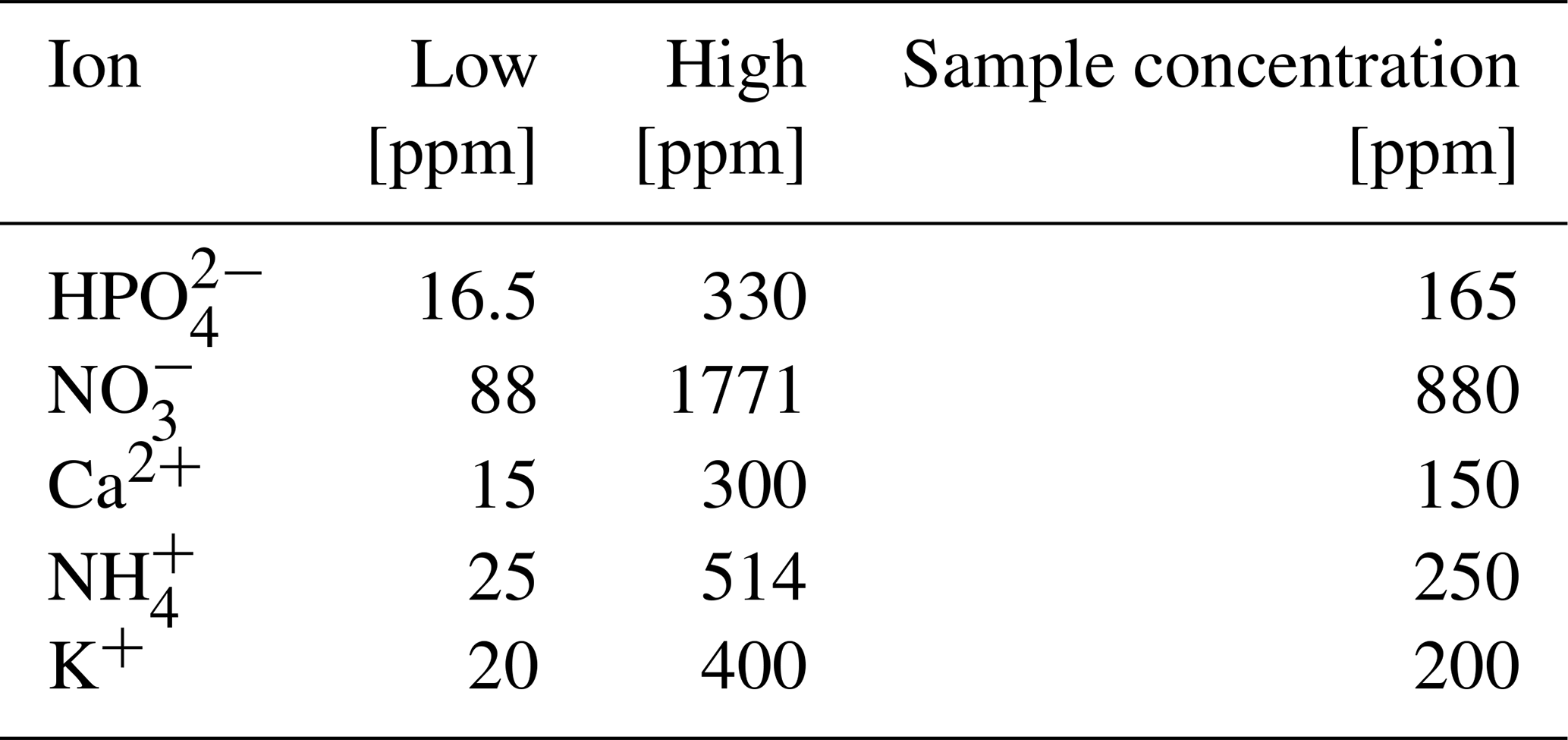
Before measurements can be performed with the system, described in Sect. 2, the electrodes must be conditioned. Therefore, for all the relevant ions (Table 2), conditioning solutions of concentration “low” are stored in the flasks. Additionally, mixed solutions of all ions have to be stored in the flasks for calibration of the system. One mixed solution contains every ion in low concentrations, and the other contains every ion in high concentrations. The system is conditioned via an automated cycle, where all of the electrodes of a certain type on a single PCB are flushed with the conditioning solution of that ion type and allowed to rest for 24 h. A measurement is made via a fully automated measuring cycle. For that, at first, all electrodes are flushed with a mixed solution, where all ions have the concentration “low”, and voltages between the three electrodes and the internal reference electrode are measured over a time interval of 3 min. Afterwards the measurement is repeated with the mixed solution “high”. For each electrode a calibration curve is calculated following Eq. (1).
Table 2Relevant ions to be measured, together with their sample concentrations, as well as low and high values in ppm.
A change of the potential of 59 mV per decade is to be expected for a singly charged ion under standard conditions (Schmidt, 2003). The slope of the ISE is a measure for its sensitivity. For each ion type the system automatically chooses the electrode whose calculated slope is closest to the expected value. By this procedure, system errors, e.g., air bubbles on top of the electrode, are eliminated to the greatest possible extent. Afterwards, the system is flushed with the sample solution of unknown ion concentrations, and measured voltages are calculated as concentrations using the corresponding calibration curves. In case a concentration falls below a pre-defined value, a pump can be activated that delivers the depleted ion type as a concentrated solution into the reservoir tank to adjust the ion concentration to its predefined value.
3.3 Elemental measurements
The elemental measurements of the hydroponic nutrient formulation were performed using several methods. The colorimetric method was conducted for measuring nitrogen using the WT013 kit (HiMedia) and ammoniacal nitrogen using the WT042 kit (HiMedia). For all other elements, inductively coupled plasma mass spectrometry (ICP-MS) methods and the AutoNutri system were employed. All analytical-grade nutrient salts were procured from HiMedia. Stock solutions of each analyte and were prepared in deionized (DI) water.
3.3.1 ICP-MS method
Shimadzu (ICP-MS)-2030, coupled with an AS-10 autosampler, was utilized for quantitative elemental analysis of hydroponic nutrients. A standard ICP-MS method for the determination of mineral and trace elemental contents in drinking water was used for the elemental measurements (Li et al., 2026). Briefly, all nutrient water samples were analyzed in triplicate and were diluted two times in 1 % analytical-grade HNO3. Multi-element stock solutions from Inorganic Venture, Merck, and Sigma-Aldrich were used for the preparation of calibration standards by serial dilution in 1 % HNO3.
3.3.2 AutoNutri system
The ion-selective electrode (ISE) was conditioned with five different conditioning solutions: sodium dihydrogen orthophosphate (19 ppm), sodium nitrate (113 ppm), ammonium chloride (6 ppm), calcium chloride dihydrate (55 ppm), and potassium chloride (44 ppm). Following this, the ISEs undergo a sequential two-point calibration, with low- and high-calibration solutions. The expected ppm values for both low- and high-calibration solutions were calculated for five ions (NO, NH, HPO, K+, and Ca2+) and were provided to the AutoNutri software. The electrochemical potential (millivolts) generated by each electrode in response to these known concentrations of low and high ppm values is recorded against an internal reference electrode. Further, the AutoNutri interpolates these measurements and determines the ppm values of the sample solution, which lies between the low- and high-calibration points, to estimate the corresponding ion concentration.
3.3.3 Testing and validation
AutoNutri system was tested and validated on two sets of hydroponic nutrient samples – synthetic standard nutrient mixtures and complex commercial samples – to assess its sensitivity and measurement accuracy. The AutoNutri-measured values were compared with analytical methods, such as ICP-MS and colorimetric methods, to verify sensing performance.
Synthetic standard nutrient mixtures
AutoNutri sensing performance was tested and validated on six synthetic standard nutrient mixtures comprising of NO, NH, HPO, K+, and Ca2+ prepared independently using different stock solutions to cover low, medium, and high concentrations across the dynamic range of hydroponic nutrients. These synthetic standard solutions were prepared using different concentrations of sodium phosphate dibasic (Na2HPO4), sodium nitrate (NaNO3), ammonium chloride (NH4Cl), calcium chloride dihydrate (CaCl2 ⋅ 2H2O), and potassium chloride (KCl) (Tables S1 and S2 in the Supplement). From these tests, the low- and high-concentration ranges of AutoNutri were used as low- and high-calibration solutions, respectively (Table S3). The expected ppm values for low- and high-calibration solutions were fed into the AutoNutri software. Three aliquots of these samples were prepared for ICP-MS, AutoNutri, and colorimetric kit-based elemental analysis. The test samples were analyzed in triplicate for the AutoNutri system and validated by ICP-MS (for phosphate, potassium, and calcium) and colorimetric-based kit methods (for nitrate and ammoniacal nitrogen). A total of 30 mL of each test sample and each high- and low- calibration solution and 6 mL each of the five conditioning solutions were supplied to the AutoNutri system for testing and validation. Deming linear regression analysis was performed to assess constant (β0, offset) and proportional (β1, slope) systematic bias. ICP-MS and the colorimetric method were used as validated reference measurements. ICP-MS and colorimetric methods were plotted on the x axis and the AutoNutri method was plotted on the y axis to evaluate systematic difference, recovery efficiency, and absolute agreement.
Complex commercial nutrient mixture
The AutoNutri system was installed at a commercial outdoor hydroponic farm in India (Igatpuri, Maharashtra) to validate its functionality in real time and in the field setup. A complex commercially available multi-ion hydroponic nutrient formulation, HigroSuper (HiMedia), was utilized to study the interference at different concentrations of NO, NH, HPO, K+, and Ca2+ for testing purposes. The hydroponic nutrient solutions were prepared with an EC of 0.5 mS cm−1 (low calibration) and 2.5 mS cm−1 (high calibration) (Table 3). The three test sample solutions with ECs of 1.0, 1.4, and 1.8 mS cm−1 were tested using the AutoNutri system and verified by ICP-MS and colorimetric-based kit methods. The expected low- and high-calibration-solution ppm values were fed into the AutoNutri system for test sample analysis. Three aliquots were prepared and tested in triplicate for each of the three methods. The ICP-MS method was used as a validated reference measurement and compared with AutoNutri in terms of percent recovery (%) and relative error (%).
4.1 System qualification
The AutoNutri system was first qualified in the laboratory by using mixed ion calibration liquids of low and high concentration with a subsequent measurement of a mixed solution of known ion concentrations, lying in between the high and low values. Before the system delivers reproducible measurements, the ion-selective electrodes are conditioned with liquids, containing only the specific ion type of the ISE. For this, standard solutions of 1 mM concentration (1 ppm for hydrogen phosphate) are flushed over the corresponding sensor boards for at least 12 h. Conditioning solutions are also applied to the sensors after every measurement to maintain the conditioning.
After conditioning, a warm-up phase is initiated. For the determination of the required warm-up interval, all sensor PCBs are repeatedly flushed (time interval of 15 min) with low- and high-concentration solutions. Later, a measurement is made with the intermediate concentration solution (Fig. 3). The measuring values of the three electrodes of each ion type converge to a constant level after 30 min. The effect is less relevant for hydrogen phosphate compared to the other ion types.
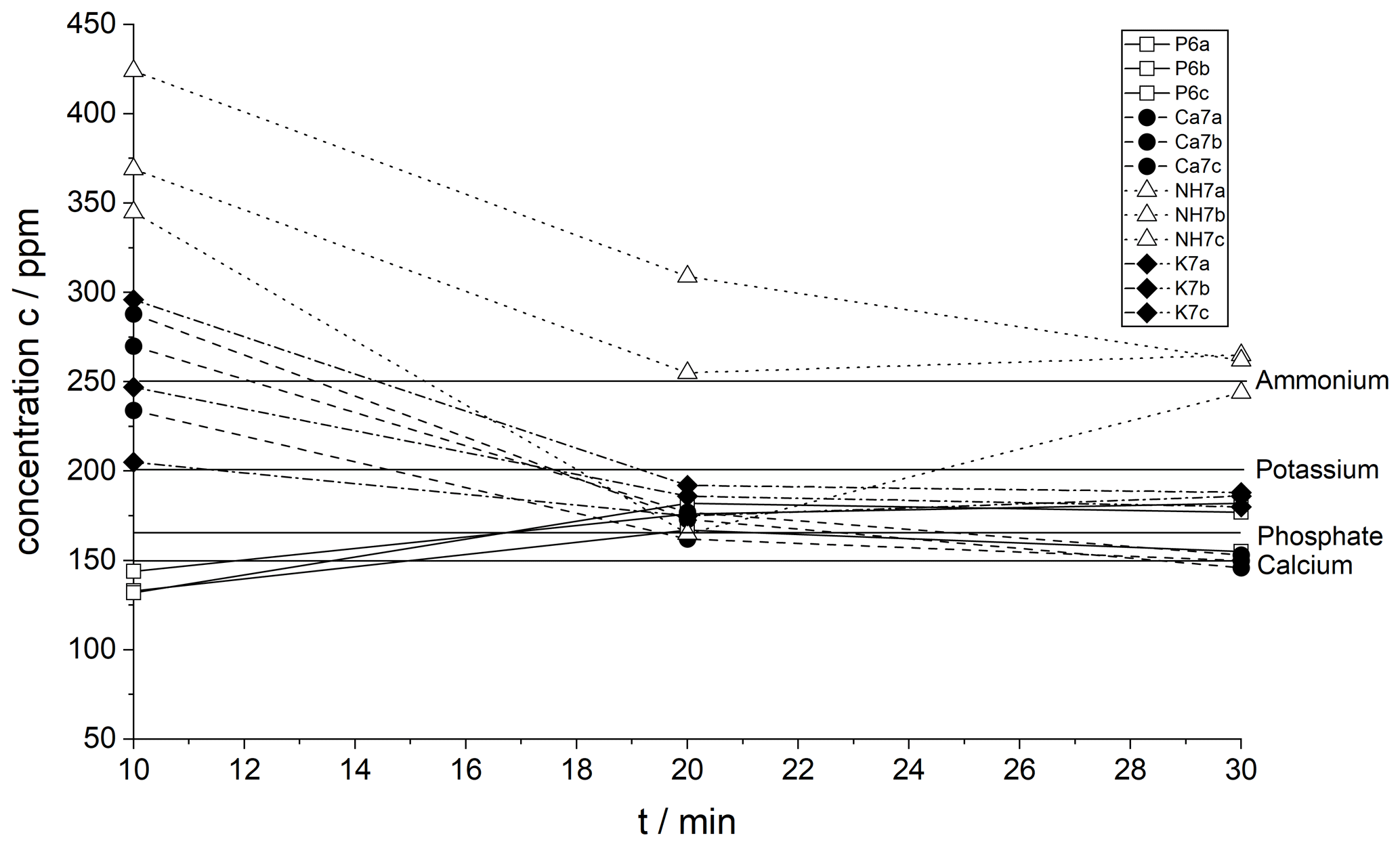
Figure 3Concentration values of different ion sensors as a function of time during system warm up.
After the warm-up phase, a calibration routine is performed by flushing the different sensor boards with low and high mixed calibration liquids. The logarithmic concentration values are linearly fitted for all three sensors of each PCB (each ion type), and the slope closest to the theoretical value is selected as the calibration curve for that ion type (Fig. 4).
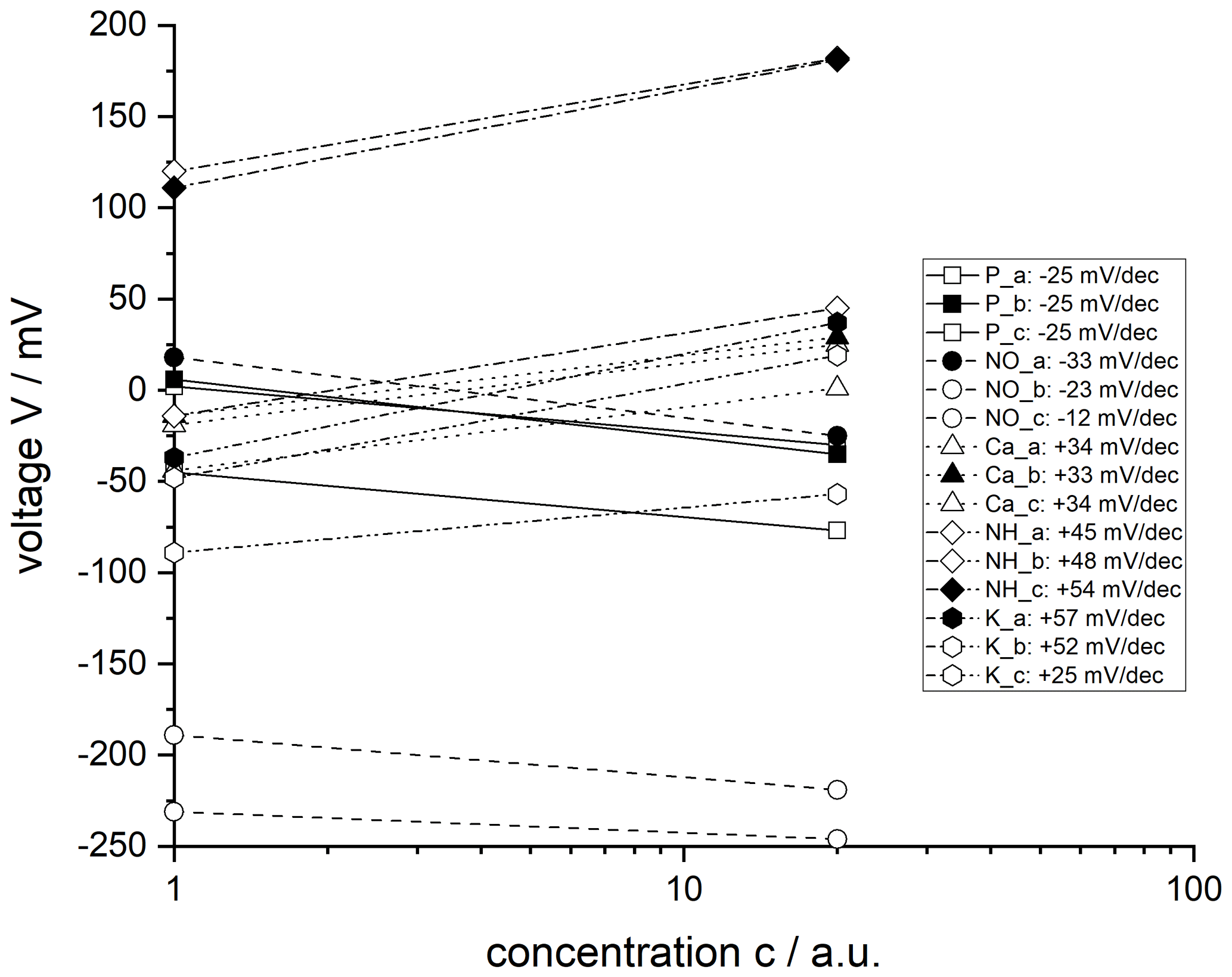
Figure 4Logarithmic plot of the voltage as a function of the ion concentration with corresponding slopes (best slope with solid symbol).
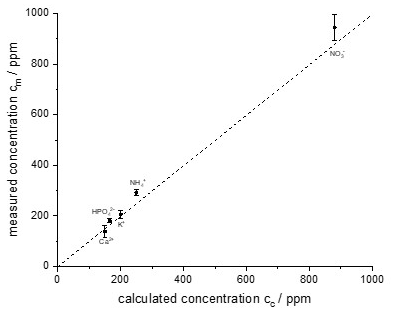
The recovery and mean error of the system are determined by measuring mixed solutions of known ion content, calculating the concentrations from the corresponding calibration curves and comparing them to the real values (Fig. 5). All calculations were done by the AutoNutri integrated computer system considering only the best calibration curve, the one with the slope closest to the theoretical value. The values for the recovery [%] (defined as mean) ⋅ 100) are 96.9 % for potassium, 90.6 % for hydrogen phosphate, 83.3 % for ammonium, 92.7 % for nitrate, and 92.7 % for calcium, while the corresponding values for the mean error [%] (defined as SD() are 7.8 % for potassium, 4.4 % for hydrogen phosphate, 4.2 % for ammonium, 5.5 % for nitrate, and 16.0 % for calcium. It must be emphasized that the calculated values of recovery and mean error are based on a two-point calibration only, which was a compromise between speed and the number of calibration liquids to be stored and the achievable accuracy. There are different factors influencing the accuracy of the measurements: the accuracy with which the slope of the calibration curve can be measured, the accuracy of weighing the salts for adjusting the ion concentration in the mixed solutions, and the non-perfect selectivity of the ion-selective electrodes. It is expected that a chemometric model, based on regression techniques, could serve for an improvement of the system's accuracy. However, this was not part of the investigations described here and will be presented elsewhere.
4.2 Qualification on a hydroponic farm with synthetic and real-world samples
4.2.1 Testing and validation for synthetic standard nutrient mixture
The synthetic standard hydroponic nutrient mixtures with known concentrations of NO, NH, HPO, K+, and Ca2+ were analyzed using analytical methods (ICP-MS and colorimetric-based kit method) and the AutoNutri system. The correlation between targeted key ions measured by AutoNutri and those measured by ICP-MS and colorimetry was analyzed at the corresponding concentrations. For all ions, a linear relationship was observed between analytically measured values on the x axis and AutoNutri-measured values on the y axis, as shown in Fig. 6. For NO, NH, HPO, K+, and Ca2+ AutoNutri-measured values for each ion concentration showed a linear trend and a high coefficient of determination (R2). NO, HPO, K+, and Ca2+ showed R2=0.9926, R2=0.9895, R2=0.9971, and R2=0.9945, respectively, indicating a linearly increasing tendency of ion concentration. Meanwhile, NH showed a trend of deviation, with a low coefficient of determination (R2=0.9388). This trend was observed in the low-concentration sections. The lowest detectable NH concentration was 2, 8, and 10 mg L−1. The proportional biases (β1) for all of the ions were less than 1.0, indicating a slight trend towards negative proportional biases. NH, NO, HPO, K+, and Ca2+ showed β1=0.9005, β1=0.8697, β1=0.9019, β1=0.8442, and β1=0.8998 respectively. The systematic bias (β0) for NO, Ca2+, K+, and HPO showed high values of 26.843, 12.524, 9.7824, and 3.2984, respectively, indicating low accuracy. However, NH exhibited a distinct systematic bias with β0=0.6583, suggesting a positive baseline shift.
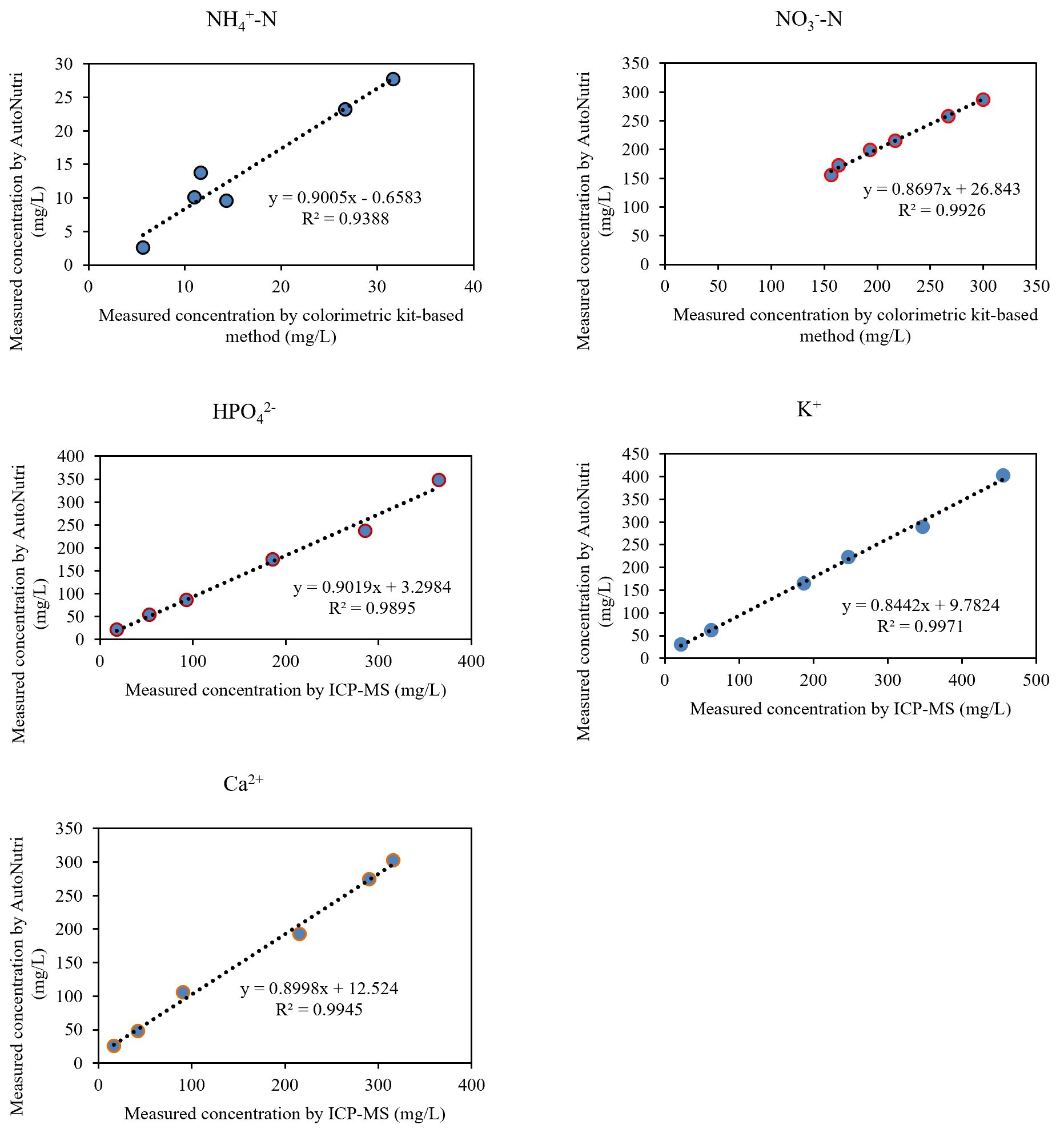
Figure 6Correlation analysis between AutoNutri-measured values and ICP-MS and colorimetric-based kit method values.
Table 3 shows the percent recoveries of all of the targeted ions at different concentration ranges in six standard nutrient mixtures. The AutoNutri-measured values were compared with the validated reference values and the expected value (given in brackets). The AutoNutri system for NO showed percent recoveries of 95.52 %, 99.42 %, 96.86 %, 105.78 %, 99.58 %, and 103.28 % (98.81 %, 111.26 %, 103.32 %, 107.99 %, 98.07 %, and 105.09 %) against the reference method for six standard nutrient mixtures containing low, medium, and high nitrate ion concentrations.
Table 3Comparison of the AutoNutri=system-measured values with the validated reference measurement values of ICP-MS and colorimetric kit-based methods for each standard ion in the synthetic standard nutrient mixture (mean ± SD). Note that n/a stands for not applicable.
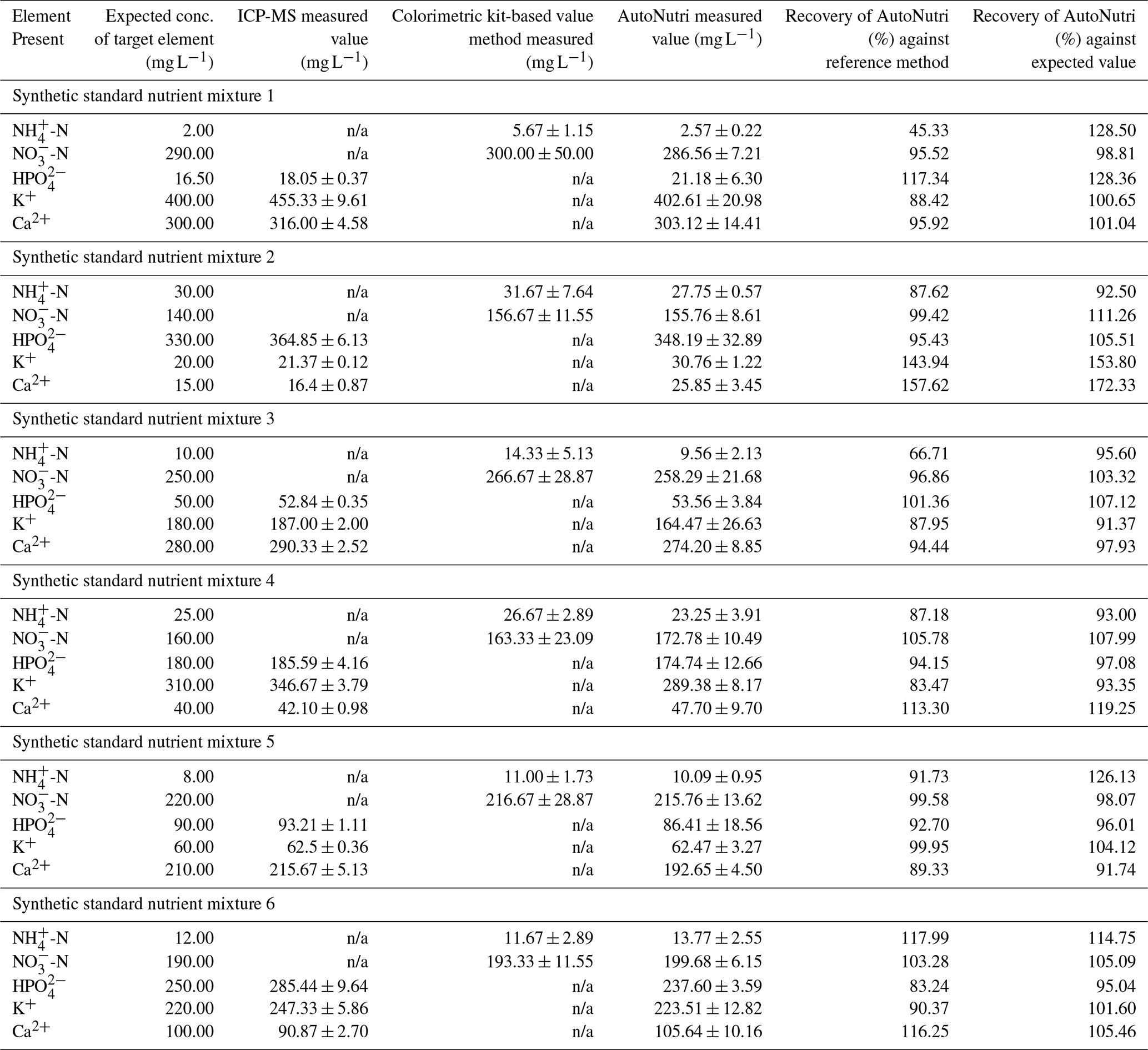
For HPO, the percent recovery against the reference method (AutoNutri-measured value reference measured value ⋅ 100) was 117.34 %, 95.43 %, 101.36 %, 94.15 %, 92.70 %, and 83.24 % (128.36 %, 105.51 %, 107.12 %, 97.08 %, 96.01 %, and 95.04 %). The over-recovery of 117.34 % can be attributed to a low HPO concentration (16.5 mg L−1). HPO showed less than 10 % (8 %) relative error (deviation from 100 % recovery) for standard mixtures 2, 3, 4, and 5; however, for mixtures 1 and 6, it showed relative errors of 17.34 % (28.36 %) and −16.76 % (−4.96 %), respectively. For NH, the percent recoveries were 45.33 %, 87.62 %, 66.71 %, 87.18 %, 91.73 %, and 117.99 % (128.5 %, 92.50 %, 95.60 %, 93.00 %, 126.13 %, and 114.75 %). NH exhibited asymmetric behavior and a high relative error, ranging from −54.67 % (−7.50 %) to 17.99 % (28.50 %). This unstable recovery, including under- and over-recovery, can be attributed to its insensitivity to low concentrations of ammoniacal nitrogen. For K+, the percent recoveries were 88.42 %, 143.94 %, 87.95 %, 83.47 %. 99.95 %, and 90.37 % (100.65 %, 153.80 %, 91.37 %, 93.35 %, 104.12 %, and 101.60 %). The over-recovery of 143.94 % (153.80%) and 43.94 % (53.80 %) relative error can be attributed to the low potassium concentration (20 mg L−1) in the standard nutrient mixtures. K+ otherwise showed an error range from −16.53 % (−8.63 %) to −0.05 % (4.12%). For Ca2+, the percent recoveries were 95.92 %, 157.62 %, 94.44 %, 113.30 %, 89.33 %, and 116.25 % (101.04 %, 172.33 %, 97.93 %, 119.25 %, 91.74 %, and 105.46 %). The over-recoveries of 157.62 % (172.33 %) and 57.62 % (72.33 %) relative error can be attributed to the low calcium concentrations (15 mg L−1) in the standard nutrient mixture. Ca2+ otherwise showed an error range from −10.67 % (−8.26 %) to 13.3 % (19.25 %). All ions except NH showed reliable concentration measurements since targeted ions in hydroponics are required at medium concentrations rather than the low testing concentrations of HPO, K+, and Ca2+. Thus, AutoNutri can be employed to accurately measure and monitor standard multi-ion solutions at each targeted ion concentration and is relatively accurate compared with validated reference measurement methods.
4.2.2 Testing and validation for complex commercial nutrient mixture
The commercial hydroponic nutrient formulations with known concentrations for the 1.0, 1.4, and 1.8 mS cm−1 solutions were analyzed using analytical methods and the AutoNutri system. Table 4 shows the percent recovery for the AutoNutri-measured values compared with the validated reference measurement values and with the expected values (given in brackets in the next paragraphs).
Table 4Comparison of the AutoNutri-system-measured values with the validated reference measurement values for each standard ion in the complex commercial nutrient mixture (mean ± SD).
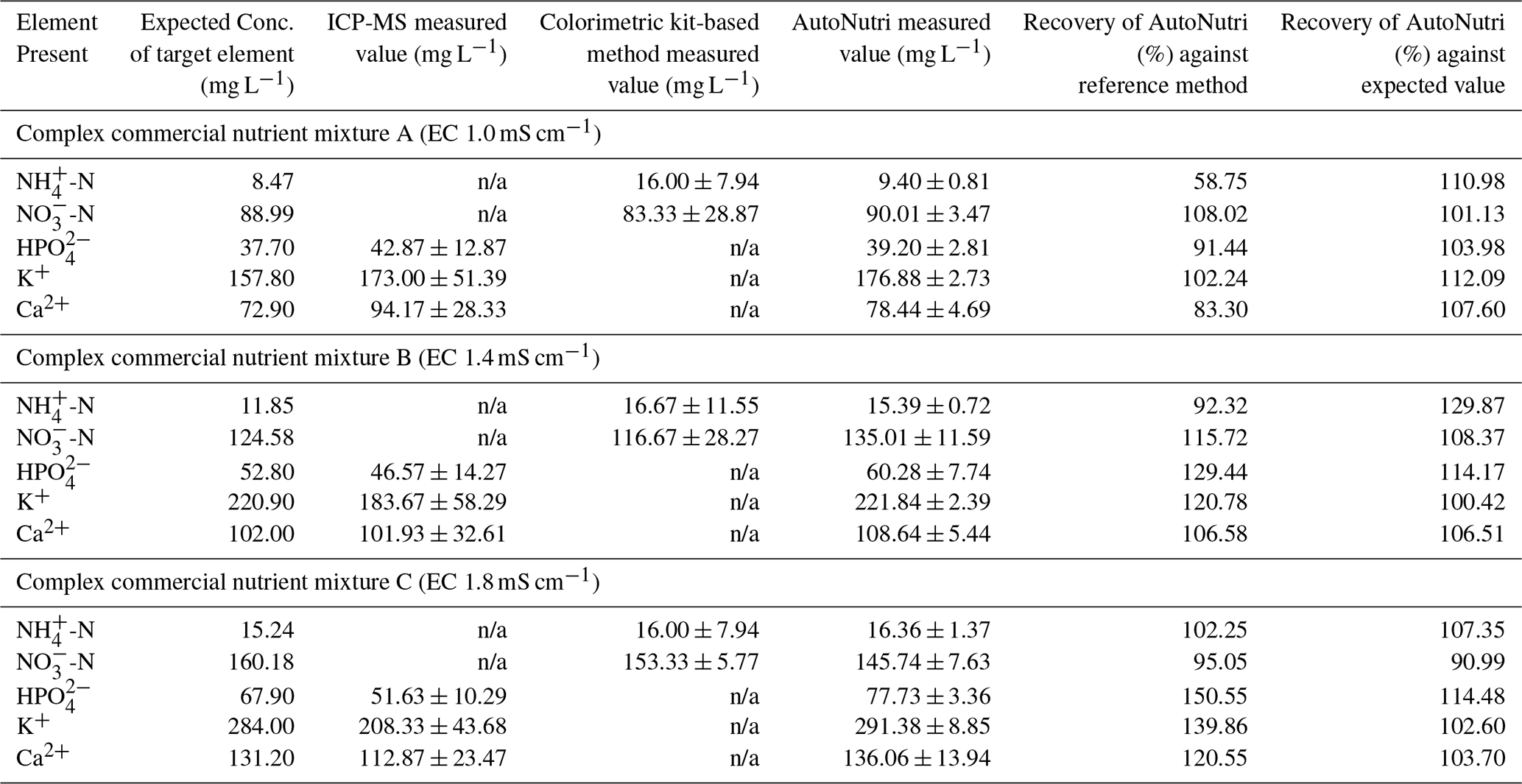
The percentage recoveries of NO at EC of 1.0, 1.4, and 1.8 mS cm−1 were 108.02 %, 115.72 %, and 95.05 % (101.13 %, 108.37 %, and 90.99 %), respectively, with error percentages ranging from −4.95 (−9.01 %) to 15.72 % (8.37 %), indicating high reliability and consistency for complex multi-ion mixtures. NH showed distinct percent recoveries of 58.75 %, 92.32 %, and 102.25 % (110.98 %, 129.87 %, and 107.35 %) across all three complex nutrient mixtures. The relative errors were −41.25 % (10.98 %), −7.68 % (29.87 %), and 2.25 % (7.35 %), respectively. For HPO, the percent recoveries were 91.44 %, 129.44 %, and 150.55 % (103.98 %, 114.17 %, and 114.48 %) for all three nutrient mixtures. The relative errors ranged from −8.56 % (3.98 %) to 50.55 % (14.48 %), indicating high noise and inconsistent results. For K+, the percent recoveries were 102.24 %, 120.78 %, and 139.86 % (112.09 %, 100.42 %, and 102.6 %), with relative errors of 2.24 %, 20.78 %, and 39.86 % (12.09 %, 0.42 % and 2.60 %), respectively. For Ca2+, the percent recoveries were 83.30 %, 106.58 %, and 120.55 % (107.60 %, 106.51 %, and 103.70 %). The relative errors ranged from −16.70 % (3.70 %) to 20.55 % (7.60 %), indicating high inconsistencies. However, the results indicate that AutoNutri-measured values were more closely aligned with the expected calculated values and showed a trend towards deviation from the validated reference measurement values of ICP-MS and colorimetric methods, suggesting greater reliability for complex commercial nutrient mixtures compared to the analytical methods (Table S8). This significant contrast further confirms that AutoNutri is a more effective and reliable method for testing NO, NH, HPO, K+, and Ca2+, providing superior accuracy.
Furthermore, the complex commercial nutrient formulation includes secondary major and minor nutrient elements such as Mg2+, SO, Fe3+, Mn2+, Mo6+, B3+, Cu2+, and Zn2+ in addition to NO, NH, HPO, K+, and Ca2+. These elements did not adversely affect measurements and yielded favorable results, reinforcing the notion that AutoNutri can be used to monitor commercially available mixed nutrients. It can be considered further for continuous monitoring of the five elements through a feedback mechanism between the AutoNutri system and respective elemental-solution reservoirs. This capability enhances the system's versatility and suitability for field applications. Currently, for analyzing mg L−1 levels of NO and NH, methods such as the Kjeldahl process, UV–vis spectrophotometry, or colorimetry are being used, while, for quantification of K+ and Ca2+, techniques such as flamephotometry, atomic absorption spectrophotometry, and colorimetry methods are employed. For the measurement of HPO, methods such as UV–vis spectrophotometry or advanced spectrometry like ICP-MS are being used (Dimkpa et al., 2017). However, all five ions are measured by the AutoNutri system, providing comprehensive results simultaneously. AutoNutri system real-time monitoring of samples with high reliability, with no sample preprocessing or dilutions and shorter analysis times compared to validated reference measurement methods.
Within qualification in the laboratory, total recoveries of 96.9 % K+, 90.6 % HPO, 83.3 % NH, 92.7 % NO, and 92.7 % Ca2+, with corresponding mean errors of 7.8 % K+, 4.4 % HPO, 4.2 % NH, 5.5 % NO, and 16 % Ca2+, could be achieved. A further improvement of these values could be expected when chemometric models based on partial least squares regression techniques is applied. It could also be shown that the AutoNutri demonstrator was working as expected under both controlled and realistic conditions. It was tested in both a controlled lab using synthetic standard nutrient solutions and a hydroponic farm using complex commercial hydroponic nutrient solutions, showing fair alignment with the validated reference methods. For the six synthetic standard solutions, the coefficient of determination was over 0.99 %, except for NH, at 0.9388 %. HPO, K+, and Ca2+ ion sensors showed reliable performance at medium concentrations; however, at low test concentrations, they exhibited some deviations. For complex nutrients, greater alignment was observed with the calculated values, making real-time monitoring a more effective and reliable method for testing NO, NH, HPO, K+, and Ca2+ and delivering superior accuracy. All of these tests indicated that the system will be a valuable future tool for automated online measurements of critical ions and for creating a nutritional homeostasis system for the optimum growth of plants. This will allow the reduction in water consumption and nutrient consumption for hydroponic greenhouses while optimizing plant growth.
The relevant raw data used to replicate figures created for this publication can be accessed at https://doi.org/10.24406/fordatis/486 (Klotzbücher et al., 2026).
The supplement related to this article is available online at https://doi.org/10.5194/jsss-15-177-2026-supplement.
Conceptualization – ideas and formulation or evolution of overarching research goals and aims: Vishal G. Warke, Uday Annapure. Data curation – management activities to annotate (produce metadata), scrub data, and maintain research data (including software code, where it is necessary for interpreting the data itself) for initial use and later reuse: (Vishal G. Warke, Manish Raut, Susanne Sigloch. Formal analysis – application of statistical, mathematical, computational, or other formal techniques to analyze or synthesize study data: Thomas Klotzbücher, Girish Mahajan, Mrunal Saste. Investigation – conducting a research and investigation process, specifically performing the experiments, or data/evidence collection: Susanne Sigloch, Juri Magomajew, Mrunal Saste, Vikas Randhe. Methodology – development or design of methodology, creation of models: Thomas Klotzbücher, Juri Magomajew, Manish Raut, Mrunal Saste, Vikas Randhe. Project administration – management and coordination responsibility for the research activity planning and execution: Rainer Gransee, Vishal G. Warke. Resources – provision of study materials, reagents, materials, patients, laboratory samples, animals, instrumentation, computing resources, or other analysis tools: Juri Magomajew, Manish Raut, Vishal G. Warke. Software – programming, software development; designing computer programs; implementation of the computer code and supporting algorithms; testing of existing code components: Julian Höth, Knut Welzel. Supervision – oversight and leadership responsibility for the research activity planning and execution, including mentorship external to the core team: Thomas Klotzbücher, Vishal G. Warke, Girish Mahajan, Uday Annapure. Validation – verification, whether as a part of the activity or separate, of the overall replication/reproducibility of results/experiments and other research outputs: Thomas Klotzbücher, Susanne Sigloch, Mrunal Saste, Vikas Randhe). Visualization – preparation, creation, and/or presentation of the published work, specifically visualization/data presentation: Thomas Klotzbücher, Manish Raut, Mrunal Saste. Writing (original draft preparation) – creation and/or presentation of the published work, specifically writing the initial draft (including substantive translation): Thomas Klotzbücher, Rainer Gransee, Mrunal Saste, Vikas Randhe, Girish Mahajan. Writing (review and editing) – preparation, creation, and/or presentation of the published work by those from the original research group, specifically critical review, commentary or revision – including pre- or post-publication stages: Thomas Klotzbücher, Rainer Gransee, Girish Mahajan, Mrunal Saste.
The contact author has declared that none of the authors has any competing interests.
Publisher's note: Copernicus Publications remains neutral with regard to jurisdictional claims made in the text, published maps, institutional affiliations, or any other geographical representation in this paper. The authors bear the ultimate responsibility for providing appropriate place names. Views expressed in the text are those of the authors and do not necessarily reflect the views of the publisher.
Acknowledgement is given to the consortium partner RM Gerätebau Reinheim, in charge of realizing the measurement and control PCB. Part of the introduction was initially optimized by using the AI tool ChatGPT.
The work within the IGSTC 2+2 program in the project AUTONUTRI was funded by the BMFTR under grant no. IGSTC_IND19IGZ1-28.
This paper was edited by Michael Kraft and reviewed by two anonymous referees.
Ahmed, A., Alnawasrah, R., Almadani, B., Aliyu, F., and Ghaleb, M.: Contemporary smart hydroponics systems: Taxonomy, enabling technologies, and challenges, Internet of Things, 34, https://doi.org/10.1016/j.iot.2025.101794, 2025.
Bhat, K. S., Ahmad, R., Mahmoudi, T., and Hahn, Y.: High performance chemical sensor with field-effect transistors array for selective detection of multiple ions, Chem. Eng. J., 417, 128064, https://doi.org/10.1016/j.cej.2020.128064, 2021.
Bobacka, J.: Potential stability of all-solid-state ion-selective electrodes using conducting polymers as ion-to-electron transducers, Anal. Chem., 71, 4932–4937, 1999.
Cho, W. J., Kim, H. J., Jung, D. H., Kim, D. W., Ahn, T. I., and Son, J. E.: On-site ion monitoring system for precision hydroponic nutrient management, Comput. Electron. Agr., 146, 51–58, https://doi.org/10.1016/j.compag.2018.01.019, 2018.
Dimkpa, C., Bindraban, P., McLean, J. E., Gatere, L., Singh, U., and Hellums, D.: Methods for Rapid Testing of Plant and Soil Nutrients, in: Sustainable Agriculture Reviews, edited by: Lichtfouse, E., Sustainable Agriculture Reviews, vol. 25, Springer, Cham, https://doi.org/10.1007/978-3-319-58679-3_1, 2017.
Fathidarehnijeh, E., Nadeem, M., Cheema, M., Thomas, R., Krishnapillai, M., and Galagedara, L.: Current perspective on nutrient solution management strategies to improve the nutrient and water use efficiency in hydroponic systems, Can. J. Plant Sci., https://doi.org/10.1139/cjps-2023-0034, 2023.
Fraunhofer IMM: https://www.imm.fraunhofer.de/en/projects/autonutri.html (last access: 23 October 2026), 2026.
Gang, M. S., Kim, H. J., Ahn, T. I., Cho, W. J., Lee, S. H., Lee, J. Y., and Hwang, J. E.: Development of nutrient management system based on ion-equivalent concentration ratio and ion monitoring to maintain ionic balance in closed hydroponic solution, Comput. Electron. Agr., 237, 110588, https://doi.org/10.1016/j.compag.2025.110588, 2025.
Jaworska, E., Michalska, A., and Maksymiuk, K. L.: Applicability of a bipolar electrode arrangement involving ion-selective electrodes in vertical farming, with the self-controlled supply of macro- and microcomponents, Sens. Diagn., 5, 543–551, 2026.
Jung, E. S., Kim, H. J., and Ahn, T. I.: Plant Factory, 2nd edn., An Indoor Vertical Farming System for Efficient Quality Food Production, Academic Press, 273–283, https://doi.org/10.1016/B978-0-12-816691-8.00020-0, 2020.
Klotzbücher, T., Komorek, M., Magomajew, J., and Gransee, R.: A microfluidic-chip-based system for the determination of nutrient ion concentrations in hydroponic solutions by means of ion-selective electrodes (ISE), in: Proceedings of the MST Congress 2023, ISBN 978-3-8007-6203-3, 2023.
Klotzbücher, T., Sigloch, S., Magomajew, J., Welzel, K., Höth, J., Gransee, R., Warke, V. G., Saste, M., Randhe, V., Raut, M., Annapure, U., and Mahajan, G. B.: Raw Data of Paper “Multiplex measurement system for the detection of nutrients in hydroponics using ion-selective electrodes”, Fraunhofer [data set], https://doi.org/10.24406/fordatis/486, 2026.
Kozai, T., Niu, G., and Takagaki, M.: Plant Factory: An Indoor Vertical Farming System for Efficient Quality Food Production, Academic Press, https://doi.org/10.1016/C2014-0-01039-8, 2016.
Lee, J.-K., Lee, Y.-H., and Lee, D.-H.: Proximal Absorbance Calibration Method Using an Embedded Blank Reference RGB Sensor for Determination of Ion Concentrations, Agriculture, 14, 2171, https://doi.org/10.3390/agriculture14122171, 2024.
Li, R., Lim, J., and Zhan, Z.: Determination of Mineral and Trace Elemental Contents in Drinking Water by Inductively Coupled Plasma Mass Spectrometry, Shimadzu, Application News, https://www.shimadzu.com/an/sites/shimadzu.com.an/files/pim/pim_document_file/applications/application_note/14114/an_04-AD-0239-en.pdf (last access: 15 February 2026), 2021.
Lim, D., Keerthi, K., Perumbilavil, S., Suchand Sandeep, C. S., Merin Antony, M., and Matham, M. V.: A real-time on-site precision nutrient monitoring system for hydroponic cultivation utilizing LIBS, Chem. Biol. Technol. Agric., 11, 111, https://doi.org/10.1186/s40538-024-00641-6, 2024.
Milião, G. L., Hui, J., Soares, R. R. A., You, H., Vittore, K., Pola, C. C., Leung, E. H., Lee, D., Rowan, S. J., Gomes, C. L., Hersam, M. C., and Claussen, J. C.: Screen-Printed Biochar-Derived Graphene Solid-Contact Ion-Selective Electrodes for Nutrient Monitoring in Hydroponic Solutions, ACS Appl. Mater. Inter., 18, 39865–39878, 2026.
Mishra, S. J., Rout, D., and Sahoo, D.: Analysing the economic viability of hydroponic farming: a comparative cost-benefit analysis, IJPREMS, 4, https://doi.org/10.58257/IJPREMS35128, 2024.
Ramakrishnam Raju, S. V. S., Dappuri, B., Ravi Kiran Varma, P., Yachamaneni, M., Verghese, D. M. G., and Mishra, M. K.: Design and Implementation of Smart Hydroponics Farming Using IoT-Based AI Controller with Mobile Application System, J. Nanomater., https://doi.org/10.1155/2022/4435591, 2022.
Schmidt, V. M.: Elektrochemische Verfahrenstechnik, Grundlagen, Reaktionstechnik, Prozessoptimierung, Wiley-VCH, Weinheim, ISBN: 978-3-527-29958-4, 2003.
Sengupta, P., Ramsperger, C., and Koley, D.: Development of reusable screen-printed ion-selective electrodes with calibration-free operation, Sensors and Actuators Reports, 10, 100367, ISBN: 978-3-527-29958-4, 2025.
Shao, Y., Ying, Y., and Ping, J.: Recent advances in solid-contact ion-selective electrodes: functional materials, transduction mechanisms, and development trends, Chem. Soc. Rev., 49, 4405, https://doi.org/10.1039/c9cs00587k, 2020.
Son, J. E., Kim, H. J., and Ahn, T. I.: Hydroponic systems, in: Plant Factory (Second Edition), edited by: Kozai, T., Niu, G., and Takagaki, M., Academic Press, 273–283, ISBN 9780128166918, 2020.
Verma, V. C., Acharya, S., and Kumar, K.: Hydroponics: A Novel Approach to Sustain Agriculture in Water-Deficit and Urban Environment, in: Handbook of Agricultural Technologies, edited by: Al-Khayri, J. M., Yatoo, A. M., Jain, S. M., Penna, S., Springer, Singapore, https://doi.org/10.1007/978-981-99-0862-2_11-1, 2025.
Wu, Y., Liu, S., Shi, B., Peng, J., Kao, Z., Chen, Y., Hsieh, T., Chung, H., Lin, C., Fang, W., and Chen, L.: IoT-interfaced solid-contact ion-selective electrodes for cyber-monitoring of element- specific nutrient information in hydroponics, Comput. Electron. Agr., 214, 108266, https://doi.org/10.1016/j.compag.2023.108266, 2023.
Zhai, J., Luo, B., Liu, T., Dong, H., Jin, X., Wang, X., and Zhao, C.: Development of a hydroponic device using potassium Ion-Selective electrode and neural network technology, Microchem. J., 207, 112017, https://doi.org/10.1016/j.snr.2025.100367, 2024.