Articles | Volume 15, issue 2
https://doi.org/10.5194/jsss-15-189-2026
© Author(s) 2026. This work is distributed under
the Creative Commons Attribution 4.0 License.
https://doi.org/10.5194/jsss-15-189-2026
© Author(s) 2026. This work is distributed under
the Creative Commons Attribution 4.0 License.
Toward in situ PEM fuel cell diagnostics: humidity-sensitive optical fibers for integration into additively manufactured bipolar plates

AVL List GmbH, Hans-List-Platz 1, 8020 Graz, Austria
Silicon Austria Labs GmbH, Sandgasse 34, 8010 Graz, Austria
Institute of Electrical Measurement and Sensor Systems, Graz University of Technology, Inffeldgasse 33, 8010 Graz, Austria
Institute of Materials Science, Joining and Forming, Graz University of Technology, Kopernikusgasse 24/I, 8010 Graz, Austria
Gerald Auböck
Silicon Austria Labs GmbH, Sandgasse 34, 8010 Graz, Austria
Cem Odaci
Silicon Austria Labs GmbH, Sandgasse 34, 8010 Graz, Austria
Ivan Shishkin
Silicon Austria Labs GmbH, Sandgasse 34, 8010 Graz, Austria
Alexander Bergmann
Institute of Electrical Measurement and Sensor Systems, Graz University of Technology, Inffeldgasse 33, 8010 Graz, Austria
Christof Sommitsch
Institute of Materials Science, Joining and Forming, Graz University of Technology, Kopernikusgasse 24/I, 8010 Graz, Austria
Andreas Klug
AVL List GmbH, Hans-List-Platz 1, 8020 Graz, Austria
Related authors
No articles found.
Sarah Kirchhoff, Patrick Weber, Oliver F. Bischof, Gerhard Steiner, Christian Kunath, Lothar Keck, Victoria M. Fruhmann, Helmut Krasa, Alexander Bergmann, Andreas Petzold, and Ulrich Bundke
Atmos. Meas. Tech., 19, 5243–5266, https://doi.org/10.5194/amt-19-5243-2026, https://doi.org/10.5194/amt-19-5243-2026, 2026
Short summary
Short summary
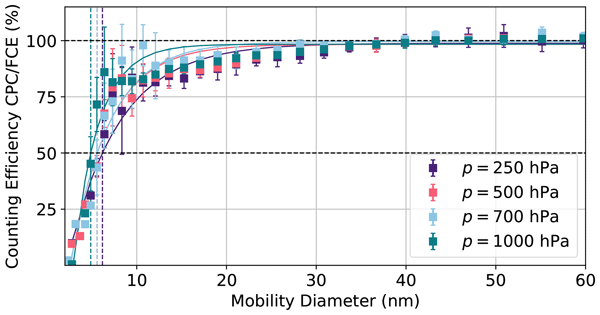
We evaluated dimethyl sulfoxide (DMSO) as a safe, non-flammable working fluid for condensation particle counters, comparing it with butanol under varied pressures, temperatures, and aerosols. Laboratory, field, and simulation results show reliable particle activation, comparable counting efficiency, reduced fluid use, and stable long-term operation. Mixtures with water extend usability, supporting safe monitoring in remote or harsh environments.
Hafiz Hashim Imtiaz, Thomas Forstinger, Paul Schaffer, Martin Kupper, and Alexander Bergmann
J. Sens. Sens. Syst., 15, 115–132, https://doi.org/10.5194/jsss-15-115-2026, https://doi.org/10.5194/jsss-15-115-2026, 2026
Short summary
Short summary
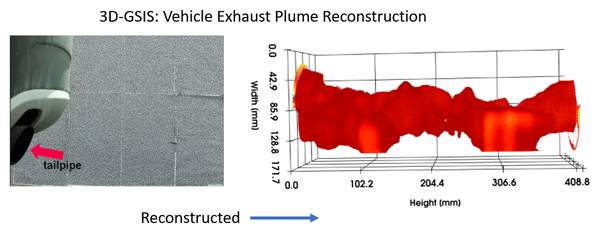
We present a 3D gas schlieren imaging sensor (3D-GSIS) for reconstructing vehicle exhaust plume density fields. It estimates plume size, laser absorption path lengths, intersection points of lasers, and local densities. Combined with advanced remote emission sensing, it enables direct measurement of pollutant concentrations in exhaust plumes.
Johannes Mandl, Philipp Trampitsch, Alexander Fröhlich, Reinhard Klambauer, and Alexander Bergmann
J. Sens. Sens. Syst., 15, 1–8, https://doi.org/10.5194/jsss-15-1-2026, https://doi.org/10.5194/jsss-15-1-2026, 2026
Short summary
Short summary
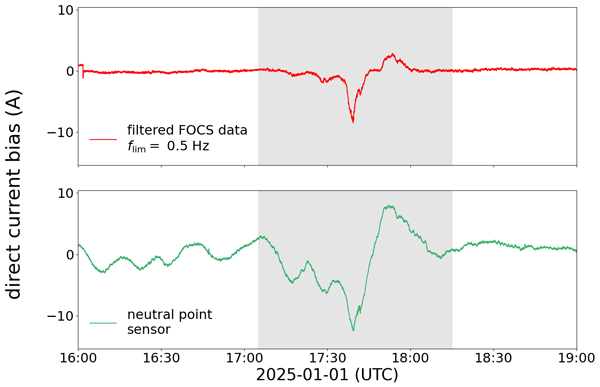
Parasitic direct currents in our alternating-current power grid affect the operation of power transformers. In this work, we present a fiber-optic current sensor system designed for the long-term monitoring of such direct currents, especially those arising from solar activity. The sensor demonstrator allows remote data access and sensor operation and was deployed at an electrical substation. For the first time, we show measurements of such currents on single phases of the power grid.
Helmut Krasa, Victoria M. Fruhmann, Sebastian Schurl, Martin Kupper, and Alexander Bergmann
Aerosol Research, 3, 521–534, https://doi.org/10.5194/ar-3-521-2025, https://doi.org/10.5194/ar-3-521-2025, 2025
Short summary
Short summary
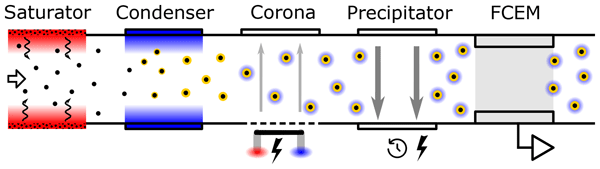
This study presents a new method to measure ultrafine airborne particle concentrations down to 3 nm at high concentrations. By growing the particles into droplets, subsequently electrically charging them, and detecting the electrical signal, the system enables accurate and compact measurements of the particle number concentration. This approach is useful for onboard monitoring of vehicle emissions where space is limited and high concentrations are measured.
Markus Knoll, Martin Penz, Hannes Juchem, Christina Schmidt, Denis Pöhler, and Alexander Bergmann
Atmos. Meas. Tech., 17, 2481–2505, https://doi.org/10.5194/amt-17-2481-2024, https://doi.org/10.5194/amt-17-2481-2024, 2024
Short summary
Short summary
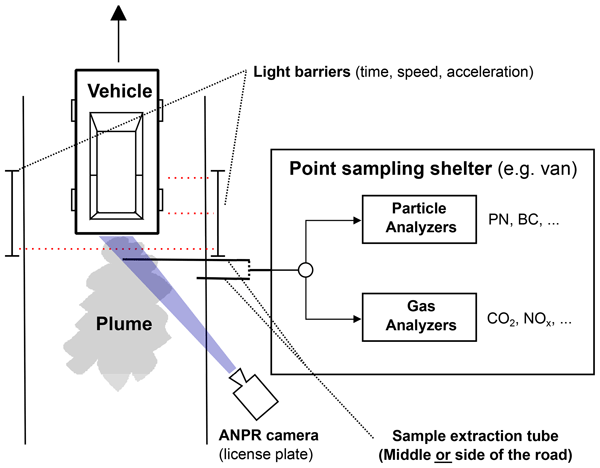
Exhaust emissions from combustion-based vehicles are negatively affecting human health and our environment. In particular, a small share (< 20 %) of poorly maintained or tampered vehicles are responsible for the majority (60 %–90 %) of traffic-related emissions. The emissions from vehicles are currently not properly monitored during their lifetime. We present a roadside measurement technique, called
point sampling, which can be used to monitor vehicle emissions throughout their life cycle.
Alexander Schossmann, Michael Töfferl, Christoph Schmidt, and Alexander Bergmann
J. Sens. Sens. Syst., 13, 31–39, https://doi.org/10.5194/jsss-13-31-2024, https://doi.org/10.5194/jsss-13-31-2024, 2024
Short summary
Short summary
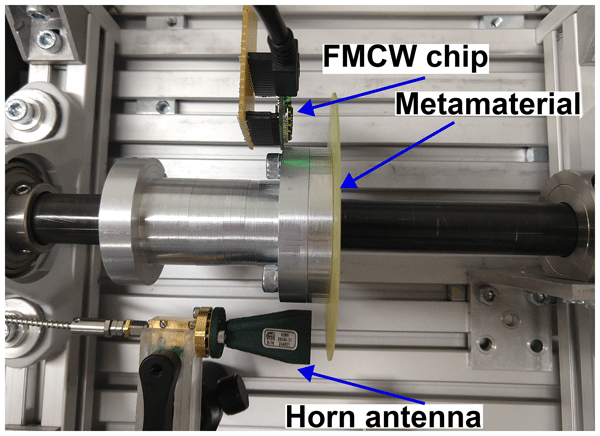
We present a concept for angle and position measurement based on metamaterials. The distance between the sensor and the rotating or moving metamaterial target is not limited to a precise value. We use state-of-the-art millimeter wave radar chip technology for read-out, initially intended for applications such as gesture recognition or contactless switches. We implement a demonstrator test setup and show the proof of principle.
Cited articles
Ahmed, F., Forhad, M. S., and Porag, M. H.: Spectral Behavior of Fiber Bragg Gratings during Embedding in 3D-Printed Metal Tensile Coupons and Cyclic Loading, Sensors, 24, 3919, https://doi.org/10.3390/s24123919, 2024.
Barbir, F.: PEM Fuel Cells: Theory and Practice, 2nd edn., Academic Press, Oxford, ISBN 978-0-12-387710-9, 2012.
Belhadj, M., Aquino, A., Heng, J., Kmiotek, S., Raël, S., Bonnet, C., and Lapicque, F.: Current density distributions in polymer electrolyte fuel cells: A tool for characterisation of gas distribution in the cell and its state of health, Chem. Eng. Sci., 185, 18–25, https://doi.org/10.1016/j.ces.2018.03.055, 2018.
Buchberger, A., Maierhofer, P., Baumgart, M., Kraft, J., and Bergmann, A.: Integrated evanescent field detector for ultrafine particles – theory and concept, Opt. Express, 28, 20177–20190, https://doi.org/10.1364/OE.394396, 2020.
Chen, N., Liu, C., Chen, L., and Yang, L.: Femtosecond laser-inscribed fiber-optic sensor for simultaneous temperature and relative humidity measurements, Opt. Laser Technol., 164, 109463, https://doi.org/10.1016/j.optlastec.2023.109463, 2023.
Corres, J. M., Arregui, F. J., and Matías, I. R.: Sensitivity optimization of tapered optical fiber humidity sensors by means of tuning the thickness of nanostructured sensitive coatings, Sens. Actuators B Chem., 122, 442–449, https://doi.org/10.1016/j.snb.2006.06.008, 2007.
David, N., Von Schilling, K., Wild, P. M., and Djilali, N.: In situ measurement of relative humidity in a PEM fuel cell using fibre Bragg grating sensors, Int. J. Hydrogen Energy, 39, 17638–17644, https://doi.org/10.1016/j.ijhydene.2014.08.010, 2014.
Fink, C., Goessling, S., Karpenko-Jereb, L., and Urthaler, P.: CFD Simulation of an Industrial PEM Fuel Cell with Local Degradation Effects, Fuel Cells, 20, 431–452, https://doi.org/10.1002/fuce.201900197, 2020.
Hartbauer, N.: Additive Manufacturing-enabled Embedding of Optical Fibers for an Advanced Automotive Fuel Cell Measurement Device, Master's thesis, Graz University of Technology, Graz, Austria, https://online.tugraz.at/tug_online/pl/ui/$ctx;design=pl;lang=en;profile=STAFF/wbAbs.showThesis?pThesisNr=79225&pOrgNr=2256 (last access: 14 November 2026), 2023.
Hussain, S., Ghaffar, A., Mehdi, M., Urf Kumail Haider, M. S., Chen, G. Y., Chen, C., Hussain, B., Niusan, K., Qureshi, K. K., and Alam, Z.: Water waves detection by utilizing optical fiber surface microchannel sensor, Opt. Laser Technol., 188, 112918, https://doi.org/10.1016/j.optlastec.2025.112918, 2025.
Irshad, H. M. and Shahgaldi, S.: Comprehensive review of bipolar plates for proton exchange membrane fuel cells with a focus on materials, processing methods and characteristics, Int. J. Hydrogen Energy, 111, 462–487, https://doi.org/10.1016/j.ijhydene.2025.02.300, 2025.
Kang, J., Zhong, T., Bai, F., Wang, B., Bao, Z., Du, Q., and Jiao, K.: Experimental study of voltage uniformity and stability of H2/O2 PEM fuel cell stack with dead-end anode and recirculation cathode, Sustain. Energy Technol. Assess., 72, 104052, https://doi.org/10.1016/j.seta.2024.104052, 2024.
Korposh, S., James, S. W., Lee, S.-W., and Tatam, R. P.: Tapered Optical Fibre Sensors: Current Trends and Future Perspectives, Sensors, 19, 2294, https://doi.org/10.3390/s19102294, 2019.
Leung, A., Rijal, K., Shankar, P. M., and Mutharasan, R.: Effects of geometry on transmission and sensing potential of tapered fiber sensors, Biosens. Bioelectron., 21, 2202–2209, https://doi.org/10.1016/j.bios.2005.11.022, 2006.
Lin, K., Qiao, J., Shi, K., Dong, W., and Gu, D.: Laser powder bed fusion of micro-channels for the application of proton exchange membrane fuel cell bipolar plates, CIRP J. Manuf. Sci. Technol., 43, 193–204, https://doi.org/10.1016/j.cirpj.2023.01.007, 2023.
Liu, X., Chen, J., Jin, L., and Liu, S.: Sensitivity analysis of current distribution to critical operating parameters for polymer electrolyte membrane fuel cells, J. Power Sources, 573, 233068, https://doi.org/10.1016/j.jpowsour.2023.233068, 2023.
Mitzel, J., Sanchez-Monreal, J., Garcia-Sanchez, D., Gazdzicki, P., Schulze, M., Häußler, F., Hunger, J., Schlumberger, G., Janicka, E., Mielniczek, M., and Gawel, L.: Fault Diagnostics in PEMFC Stacks by Evaluation of Local Performance and Cell Impedance Analysis, Fuel Cells, 20, 403–412, https://doi.org/10.1002/fuce.201900193, 2020.
Mo, S., Du, L., Huang, Z., Chen, J., Zhou, Y., Wu, P., Meng, L., Wang, N., Xing, L., Zhao, M., Yang, Y., Tang, J., Zou, Y., and Ye, S.: Recent Advances on PEM Fuel Cells: From Key Materials to Membrane Electrode Assembly, Electrochemical Energy Reviews, 6, 28, https://doi.org/10.1007/s41918-023-00190-w, 2023.
Muck, N., David, C., and Knöri, T.: Integrating Fiber Sensing for Spatially Resolved Temperature Measurement in Fuel Cells, Energies, 17, 16, https://doi.org/10.3390/en17010016, 2024.
Mühleisen, W., Consani, C., Smaliukas, P., Bainschab, M., Brunnhofer, G., and Tortschanoff, A.: Creation of a laboratory fog chamber for testing optical sensors, Eur. J. Eng. Sci. Technol., 7, 31–43, https://doi.org/10.33422/ejest.v7i2.1427, 2024.
Nabavi, S., Farshidianfar, A., and Dalir, H.: Comprehensive review: Advancements in modeling geometrical and mechanical characteristics of laser powder bed fusion process, Opt. Laser Technol., 180, 111480, https://doi.org/10.1016/j.optlastec.2024.111480, 2025.
Qasem, N. A. A.: A recent overview of proton exchange membrane fuel cells: Fundamentals, applications, and advances, Appl. Therm. Eng., 252, 123746, https://doi.org/10.1016/j.applthermaleng.2024.123746, 2024.
Quiñones-Flores, A. A., Guzman-Sepulveda, J. R., and Castillo-Guzman, A. A.: Relative Humidity Measurement Based on a Tapered, PVA-Coated Fiber Optics Multimode Interference Sensor, Optics, 4, 473–481, https://doi.org/10.3390/opt4030034, 2023.
Reiter, M.: Sensor embedding in additively manufactured metal components for innovative automotive instrumentation and test systems, Master's thesis, Graz University of Technology, Graz, Austria, https://repository.tugraz.at/publications/ae42w-gz697 (last access: 14 November 2026), 2021.
Reiter, M., Auböck, G., Bergmann, A., Sommitsch, C., Bodner, M., and Klug, A.: Measurement systems for in-situ monitoring of fuel cell systems using fiber optical sensors and colorimetric fluorescence technology, in: Proc. Sensor and Measurement Science International (SMSI 2025), AMA Service GmbH, https://doi.org/10.5162/SMSI2025/P32, 2025.
Rivero, P. J., Goicoechea, J., and Arregui, F. J.: Optical Fiber Sensors Based on Polymeric Sensitive Coatings, Polymers, 10, 280, https://doi.org/10.3390/polym10030280, 2018.
Shao, H., Qiu, D., Peng, L., Yi, P., and Lai, X.: In-situ measurement of temperature and humidity distribution in gas channels for commercial-size proton exchange membrane fuel cells, J. Power Sources, 412, 717–724, https://doi.org/10.1016/j.jpowsour.2018.12.008, 2019.
Toharias, B., Suárez, C., Iranzo, A., Salva, M., and Rosa, F.: Dataset and measurements from a current density sensor during experimental testing of dynamic load cycling for a parallel-serpentine design of a proton exchange membrane fuel cell, Data Brief, 54, 110392, https://doi.org/10.1016/j.dib.2024.110392, 2024.
Wang, H., Morando, S., Gaillard, A., and Hissel, D.: Sensor development and optimization for a proton exchange membrane fuel cell system in automotive applications, J. Power Sources, 487, 229415, https://doi.org/10.1016/j.jpowsour.2020.229415, 2021.
Wang, P., Zhao, H., Wang, X., Farrell, G., and Brambilla, G.: A Review of Multimode Interference in Tapered Optical Fibers and Related Applications, Sensors, 18, 858, https://doi.org/10.3390/s18030858, 2018.
Zhang, W., Lang, X., Liu, X., Li, G., Singh, R., Zhang, B., and Kumar, S.: Advances in Tapered Optical Fiber Sensor Structures: From Conventional to Novel and Emerging, Biosensors, 13, 644, https://doi.org/10.3390/bios13060644, 2023.
Short summary
We developed compact optical-fiber sensors intended for integration into additively manufactured bipolar plates for proton exchange membrane fuel cells. Different fiber geometries were tested under controlled humidity and water-droplet exposure. Laser-cut sensors showed sensitivity to humidity and droplets, while capillary packaging improved mechanical robustness. The concept supports future spatially resolved fuel cell diagnostics.
We developed compact optical-fiber sensors intended for integration into additively manufactured...