
Articles | Volume 15, issue 1
https://doi.org/10.5194/jsss-15-99-2026
© Author(s) 2026. This work is distributed under
the Creative Commons Attribution 4.0 License.
the Creative Commons Attribution 4.0 License.
Special issue:
https://doi.org/10.5194/jsss-15-99-2026
© Author(s) 2026. This work is distributed under
the Creative Commons Attribution 4.0 License.
the Creative Commons Attribution 4.0 License.
Regular research article
| 
25 Jun 2026
Regular research article |
| 25 Jun 2026
| 25 Jun 2026
Non-contacting determination of the piezoelectric coefficient d33 of lithium tantalate from room temperature up to 400 °C
Hendrik Wulfmeier
CORRESPONDING AUTHOR
Institut für Energieforschung und Physikalische Technologien, Technische Universität Clausthal, Goslar, 38640, Germany
Forschungszentrum Energiespeichertechnologien, Technische Universität Clausthal, Goslar, 38640, Germany
Niklas Warnecke
Institut für Energieforschung und Physikalische Technologien, Technische Universität Clausthal, Goslar, 38640, Germany
Dhyan Kohlmann
Institut für Energieforschung und Physikalische Technologien, Technische Universität Clausthal, Goslar, 38640, Germany
Holger Fritze
Institut für Energieforschung und Physikalische Technologien, Technische Universität Clausthal, Goslar, 38640, Germany
Forschungszentrum Energiespeichertechnologien, Technische Universität Clausthal, Goslar, 38640, Germany
Related authors
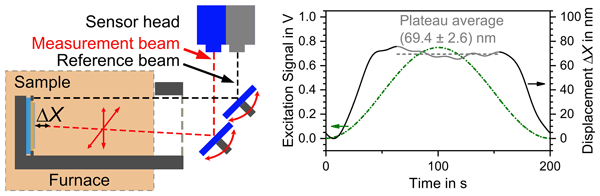
Dhyan Kohlmann, Marvin Schewe, Hendrik Wulfmeier, Christian Rembe, and Holger Fritze
J. Sens. Sens. Syst., 13, 167–177, https://doi.org/10.5194/jsss-13-167-2024, https://doi.org/10.5194/jsss-13-167-2024, 2024
Short summary
Short summary
A very small, anharmonic but periodic signal is separated from a noise background that is orders of magnitude larger than the pure signal. The approach consists of a sequence of filters and transformations and is demonstrated on an interferometric measurement of the high-temperature chemical expansion of a thin film, containing heat haze, thermal length drift, and parasitic vibrations. The displacement is 38 % larger and the uncertainty 35 % lower than when evaluated with previous approaches.
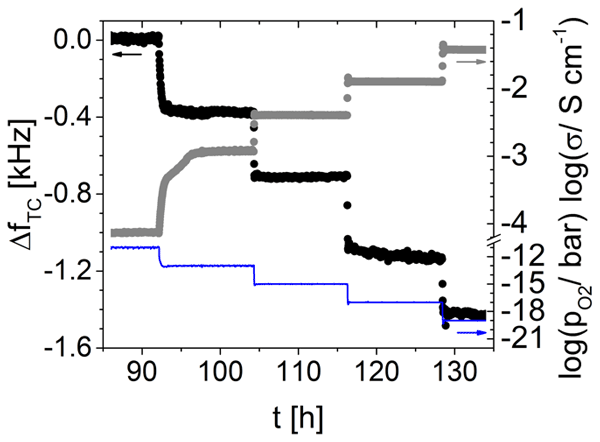
Sebastian Schlack, Hendrik Wulfmeier, and Holger Fritze
J. Sens. Sens. Syst., 11, 299–313, https://doi.org/10.5194/jsss-11-299-2022, https://doi.org/10.5194/jsss-11-299-2022, 2022
Short summary
Short summary
High-temperature stable piezoelectric resonators are coated with oxide electrodes. The impact of the oxide electrode conductivity on the mass sensitivity and on the resonance frequency of the device is described by electrical and mechanical models, which are used to analyse the experimental data. Furthermore, the impact of an increasing oxide electrode conductivity is discussed with respect to the application of oxide electrodes and for gas sensing.

Hendrik Wulfmeier, Niklas Warnecke, Luca Pasquini, Holger Fritze, and Philippe Knauth
J. Sens. Sens. Syst., 11, 51–59, https://doi.org/10.5194/jsss-11-51-2022, https://doi.org/10.5194/jsss-11-51-2022, 2022
Short summary
Short summary
A newly developed experimental setup to characterize thin polymeric films during dehydration and hydration is presented. The great advantage of this measurement device and technique is that it monitors the mass change and conductivity of the films in situ and simultaneously at virtually identical conditions. The feasibility of the technique is demonstrated by characterizing ionomer thin films. A mass resolution of ±7.9 ng is achieved. The precision of relative humidity (RH) control is ±0.15 %.
Dhyan Kohlmann, Marvin Schewe, Hendrik Wulfmeier, Christian Rembe, and Holger Fritze
J. Sens. Sens. Syst., 13, 167–177, https://doi.org/10.5194/jsss-13-167-2024, https://doi.org/10.5194/jsss-13-167-2024, 2024
Short summary
Short summary
A very small, anharmonic but periodic signal is separated from a noise background that is orders of magnitude larger than the pure signal. The approach consists of a sequence of filters and transformations and is demonstrated on an interferometric measurement of the high-temperature chemical expansion of a thin film, containing heat haze, thermal length drift, and parasitic vibrations. The displacement is 38 % larger and the uncertainty 35 % lower than when evaluated with previous approaches.
Sebastian Schlack, Hendrik Wulfmeier, and Holger Fritze
J. Sens. Sens. Syst., 11, 299–313, https://doi.org/10.5194/jsss-11-299-2022, https://doi.org/10.5194/jsss-11-299-2022, 2022
Short summary
Short summary
High-temperature stable piezoelectric resonators are coated with oxide electrodes. The impact of the oxide electrode conductivity on the mass sensitivity and on the resonance frequency of the device is described by electrical and mechanical models, which are used to analyse the experimental data. Furthermore, the impact of an increasing oxide electrode conductivity is discussed with respect to the application of oxide electrodes and for gas sensing.
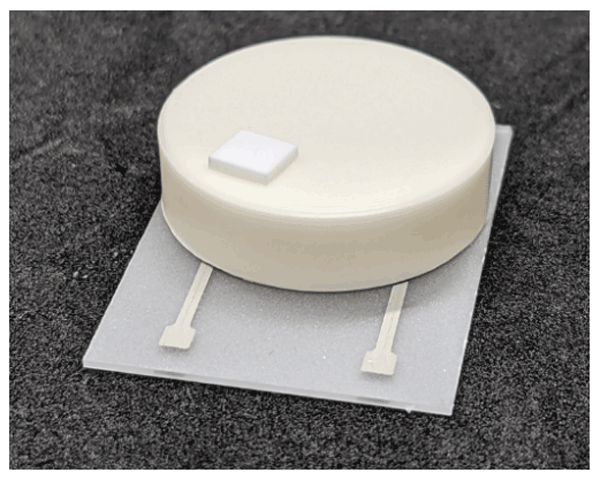
Fabian Kohler, Monika Farina, Michal Schulz, Holger Fritze, and Jürgen Wilde
J. Sens. Sens. Syst., 11, 83–97, https://doi.org/10.5194/jsss-11-83-2022, https://doi.org/10.5194/jsss-11-83-2022, 2022
Short summary
Short summary
This work shows a possibility of assembly and connection technology for use under high temperatures up to 1000 °C. A packaging concept was developed, and all the necessary material and joining technologies have been verified to be suitable for use at 1000 °C. A working sensor was built and measured in comparison to the resonator alone. All packaging materials and structures were measured electrically and dielectrically. Equivalent circuits for the packages up to 2 MHz and 1000 °C are available.
Hendrik Wulfmeier, Niklas Warnecke, Luca Pasquini, Holger Fritze, and Philippe Knauth
J. Sens. Sens. Syst., 11, 51–59, https://doi.org/10.5194/jsss-11-51-2022, https://doi.org/10.5194/jsss-11-51-2022, 2022
Short summary
Short summary
A newly developed experimental setup to characterize thin polymeric films during dehydration and hydration is presented. The great advantage of this measurement device and technique is that it monitors the mass change and conductivity of the films in situ and simultaneously at virtually identical conditions. The feasibility of the technique is demonstrated by characterizing ionomer thin films. A mass resolution of ±7.9 ng is achieved. The precision of relative humidity (RH) control is ±0.15 %.
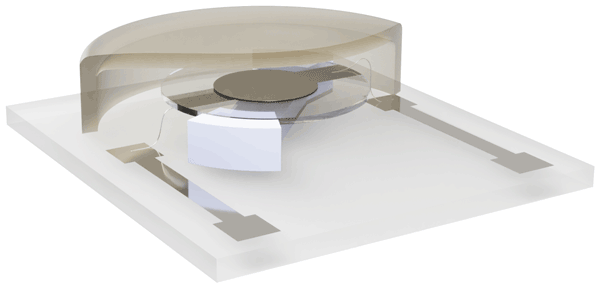
Michal Schulz, Rezvan Ghanavati, Fabian Kohler, Jürgen Wilde, and Holger Fritze
J. Sens. Sens. Syst., 10, 271–279, https://doi.org/10.5194/jsss-10-271-2021, https://doi.org/10.5194/jsss-10-271-2021, 2021
Short summary
Short summary
Temperature sensors based on piezoelectric devices enable precise measurement of temperature changes in harsh environments such as high temperatures or aggressive atmospheres. In the case of this device, the change in the temperature is detected by means of the changing resonance frequency of the sensor. Here a sensor device based on catangasite (an isomorph of quartz) is presented. We discuss its behavior at elevated temperatures and confirm that it can successfully operate up to 1030 °C.
Cited articles
Acosta, M., Novak, N., Rojas, V., Patel, S., Vaish, R., Koruza, J., Rossetti Jr., G. A., and Rödel, J.: BaTiO3-based piezoelectrics: Fundamentals, current status, and perspectives, Appl. Phys. Rev. 4, 041305, https://doi.org/10.1063/1.4990046, 2017.
Berg, S., Prellberg, T., and Johannsmann, D.: Nonlinear contact mechanics based on ring-down experiments with quartz crystal resonators. Rev. Sci. Instrum., 74, 118–126, https://doi.org/10.1063/1.1523647, 2003.
Bergaoui, Y., Zerrouki, C., Fougnion, J. M., Fourati, N., and Abdelghani, A.: Sensitivity estimation and biosensing potential of lithium tantalate shear horizontal surface acoustic wave sensor, Sens. Lett., 7, 1001–1005, https://doi.org/10.1166/sl.2009.1188, 2009.
Bund, A. and Schwitzgebel, G.: Signal oscillations of a piezoelectric quartz crystal caused by compressional waves, Anal. Chim. Acta, 364, 189–194, https://doi.org/10.1016/S0003-2670(98)00201-3, 1998.
Chen, Y., Wang, S., Zhou, H., Xu, Q., Wang, Q., and Zhu, J.: A systematic analysis of the radial resonance frequency spectra of the PZT-based (Zr/Ti = 52/48) piezoceramic thin disks, J. Adv. Ceram., 9, 380–392, https://doi.org/10.1007/s40145-020-0378-5, 2020.
Colwell, R. C. and Hardy, H. C.: LXXXIX. The frequencies and nodal systems of circular plates, The London, Edinburgh, and Dublin Philosophical Magazine and Journal of Science, 24, 1041–1055, https://doi.org/10.1080/14786443708565163, 1937.
Damjanovic, D.: Materials for high temperature piezoelectric transducers, Curr. Opin. Solid State Mater. Sci., 3, 469–473, https://doi.org/10.1016/S1359-0286(98)80009-0, 1998.
de Castilla, H., Bélanger, P., and Zednik, R. J.: High temperature characterization of piezoelectric lithium niobate using electrochemical impedance spectroscopy resonance method, J. Appl. Phys., 122, 1–8, https://doi.org/10.1063/1.4996202, 2017.
Ern, A. and Guermond, J.-L.: Theory and Practice of Finite Elements, Springer Science+Business Media, New York, https://doi.org/10.1007/978-1-4757-4355-5, 2004.
Flax, L., Gaunaurd, L. C., and Überall, H.: Theory of Resonance Scattering, in: Physical Acoustics: Principles and Methods – Volume XV, edited by: Mason, W. P. and Thurston, R. N., Academic Press, https://doi.org/10.1016/B978-0-12-477915-0.50008-7, 1981.
George, S. P., Isaac, J., and Philip, J.: Coupled field analysis of piezoelectric materials for sensor and actuator applications using finite element method, Mater. Today Proc., 59, 1202–1210, https://doi.org/10.1016/j.matpr.2022.03.422, 2022.
Glass, A. M.: Dielectric, thermal, and pyroelectric properties of ferroelectric LiTaO3, Phys. Rev., 172, 564–571, https://doi.org/10.1103/PhysRev.172.564, 1968.
Göpel, W., Hesse, J., and Zemel, J. N.: Sensors: A Comprehensive Survey – Mechanical Sensors, 7, VCH Weinheim, ISBN 3-5272-6773-5, 1994.
Gopalan, V., Dierolf, V., and Scrymgeour, D. A.: Defect–Domain Wall Interactions in Trigonal Ferroelectrics, Annu. Rev. Mater. Res., 37, 449–489, https://doi.org/10.1146/annurev.matsci.37.052506.084247, 2007.
Haynes, W. M. and Frederiske, H. P. R.: CRC Handbook of Chemistry and Physics, 95th Edn., CRC Press, 2704 pp., https://doi.org/10.1201/b17118, 2014.
IEEE: Standard on Piezoelectricity, ANSI/IEEE Std 176-1987, https://doi.org/10.1109/IEEESTD.1988.79638, 1988.
Ikeda, T.: Fundamentals of Piezoelectricity, Oxford University Press, ISBN 0-19-856339-6, 1990.
Jacob, M. V., Hartnett, J. C., Mazierska, J., Krupka, J., and Tobar, M. E.: Lithium tantalate – a high permittivity dielectric material for microwave communication systems, TENCON 2003. Conference on Convergent Technologies for Asia-Pacific Region, Bangalore, India, 4, 1362–1366, https://doi.org/10.1109/TENCON.2003.1273139, 2003.
Jacob, M. V., Hartnett, J. C., Mazierska, Giordano, V., J., Krupka, J., and Tobar, M. E.: Temperature dependence of permittivity and loss tangent of lithium tantalate at microwave frequencies, IEEE T. Microw. Theory, 52, 536–541, https://doi.org/10.1109/TMTT.2003.821911, 2004.
Johannsmann, D. and Heim, L.-O.: A simple equation predicting the amplitude of motion of quartz crystal resonators, J. Appl. Phys., 100, https://doi.org/10.1063/1.2359138, 2006.
Johnston, W. D. and Kaminow, I. P.: Temperature dependence of Raman and Rayleigh scattering in LiNbO3 and LiTaO3, Phys. Rev., 168, 1045–1054, https://doi.org/10.1103/PhysRev.168.1045, 1968.
Kadota, M., Ogami, T., Yamamoto, K., and Tochishita, H.: LiNbO3 thin film for A1 mode of Lamb wave resonators, Phys. Status Solidi, 208, 1068–1071, https://doi.org/10.1002/pssa.201000060, 2011.
Kadota, M., Ishii, Y., and Tanaka, S.: Surface acoustic wave resonators with hetero acoustic layer (HAL) structure using lithium tantalate and quartz, IEEE T. Ultrason. Ferr., 68, 1955–1964, https://doi.org/10.1109/TUFFC.2020.3039471, 2021.
Kohlmann, D., Wulfmeier, H., Schewe, M., Kogut, I., Steiner, C., Moos, R., Rembe, C., and Fritze, H.: Chemical expansion of CeO2−δ and Ce0.8Zr0.2O2−δ thin films determined by laser Doppler vibrometry at high temperatures and different oxygen partial pressures, J. Mater. Sci., 58, 1481–1504, https://doi.org/10.1007/s10853-022-07830-4, 2023.
Kohlmann, D., Schewe, M., Wulfmeier, H., Rembe, C., and Fritze, H.: Extraction of nanometer-scale displacements from noisy signals at frequencies down to 1 mHz obtained by differential laser Doppler vibrometry, J. Sens. Sens. Syst., 13, 167–177, https://doi.org/10.5194/jsss-13-167-2024, 2024.
Kollmann, F., Schösser, T., and Angert, R.: Praktische Maschinenakustik, Springer-Verlag Berlin Heidelberg, ISBN-10 3-5402-0094-0, ISBN-13 978-3-5402-0094-9, 2005.
Koskela, J., Knuuttila, J. V., Makkonen, T., Plessky, V. P., and Salomaa, M. M.: Acoustic loss mechanisms in leaky SAW resonators on lithium tantalate, IEEE T. Ultrason. Ferr., 48, 1517–1526, https://doi.org/10.1109/58.971702, 2001.
Leissa, A. W.: Vibration of Plates, NASA SP-160, Library of Congress Catalog Card Number 67-62660, 1969.
Levinstein, H. J., Ballman, A. A., and Capio, C. D.: Domain structure and Curie temperature of single-crystal lithium tantalate, J. Appl. Phys., 37, 4585–4586, https://doi.org/10.1063/1.1708088, 1966.
Li, J.-F.: Lead-free piezoelectric materials, Wiley-VCH, Weinheim, ISBN 978-3-527-81707-8, 2021.
Li, J.-F., Moses, P., and Viehland, D.: Simple, high-resolution interferometer for the measurement of frequency-dependent complex piezoelectric responses in ferroelectric ceramics, Rev. Sci. Instrum., 66, 215–221, https://doi.org/10.1063/1.1145261, 1995.
Lowe, M. J. S.: Matrix techniques for modeling ultrasonic waves in multilayered media, IEEE T. Ultrason. Ferr., 42, 525–542, https://doi.org/10.1109/58.393096, 1995.
Lu, R., Yang, Y., and Gong, S.: Acoustic loss in thin-film lithium niobate: An experimental study, J. Microelectromechan. Syst., 30, 632–641, https://doi.org/10.1109/JMEMS.2021.3092724, 2021.
Martin, B. A. and Hager, H. E.: Velocity profile on quartz crystals oscillating in liquids, J. Appl. Phys., 65, 2630, https://doi.org/10.1063/1.342772, 1989.
McSkimin, H. J.: Variations of the ultrasonic pulse-superposition method for increasing the sensitivity of delay-time measurements, J. Acoust. Soc. Am., 37, 864–871, https://doi.org/10.1121/1.1909464, 1965.
Meng, X., Huang, X., Xing, B., Sun, X., Liu, M., and Tian, H.: Ultra-high piezoelectric properties and labyrinthine-domain structure in (K,Na)(Ta,Nb)O3 with phase boundaries, Cryst. Eng. Comm., 24 7944, https://doi.org/10.1039/D2CE01125E, 2022.
Milek, J. T. and Neuberger, M.: Linear electrooptic modular materials, Springer, 125–142, https://doi.org/10.1007/978-1-4684-6168-8, 1972.
Moilanen, H. and Leppävuori, S.: Laser interferometric measurement of displacement-field characteristics of piezoelectric actuators and actuator materials, Sens. Actuat. A Phys., 92, 326–334, https://doi.org/10.1016/S0924-4247(01)00591-X, 2001.
Ogi, H., Kawasaki, Y., Hirao, M., and Ledbetter, H.: Acoustic spectroscopy of lithium niobate: elastic and piezoelectric coefficients, J. Appl. Phys., 92, 2451–2456, https://doi.org/10.1063/1.1497702, 2002.
Ogi, H., Nakamura, N., Sato, K., Hirao, M., and Uda, S.: Elastic, anelastic, and piezoelectric coefficients of langasite: resonance ultrasound spectroscopy with laser-Doppler interferometry, IEEE T. Ultrason. Ferr., 50, 553–560, https://doi.org/10.1109/TUFFC.2003.1201468, 2003.
Ren, Y., Wu, M., and Liu, J.-M.: Ultra-high piezoelectric coefficients and strain-sensitive Curie temperature in hydrogen-bonded systems, Nat. Sci. Rev., 8, nwaa203, https://doi.org/10.1093/nsr/nwaa203, 2021.
Rosen, D., Bjurstrom, J., and Katardjiev, I.: Suppression of spurious lateral modes in thickness-excited FBAR resonators, IEEE T. Ultrason. Ferr., 52, 1189–1192, https://doi.org/10.1109/TUFFC.2005.1504006, 2005.
Royer, D. and Kmetik, V.: Measurement of piezoelectric constants using an optical heterodyne interferometer, Electron. Lett., 28, 1828, https://doi.org/10.1049/el:19921166, 1992.
Samuelsen, E. J. and Grande, A. P.: The ferroelectric phase transition in LiTaO3 studied by neutron scattering: I. The long-range order, Z. Phys. B Condens. Matter, 24, 207–210, https://doi.org/10.1007/BF01313002, 1976.
Sauerwald, J., Richter, D., Ansorge, E., Schmidt, B., and Fritze, H.: Langasite based miniaturized functional structures: Preparation, high-temperature properties and applications, Phys. Status Solidi, 208, 390–403, https://doi.org/10.1002/pssa.201026639, 2011.
Schewe, M., Kohlmann, D., Wulfmeier, H., Fritze, H., and Rembe, C.: Differential laser Doppler vibrometry for displacement measurements down to 1 mHz with 1 nm amplitude resolution in harsh environments, Measurement, 210, 112576, https://doi.org/10.1016/j.measurement.2023.112576, 2023.
Schmidtchen, S., Fritze, H., Bishop, S., Chen, D., and Tuller, H. L.: Chemical expansion of praseodymium-cerium oxide films at high temperatures by laser Doppler vibrometry, Solid State Ion., 319, 61–67, https://doi.org/10.1016/j.ssi.2018.01.033, 2018.
Shibata, Y., Kuze, N., Matsui, M., Kanno, Y., Kaya, K., Ozaki, M., Kanai, M., and Kawai, T.: Surface acoustic wave properties of lithium tantalate films grown by pulsed laser deposition, Jpn. J. Appl. Phys., 34, 249, https://doi.org/10.1143/JJAP.34.249, 1995.
Shur, V. Y.: Lithium niobate and lithium tantalate-based piezoelectric materials, in: Adv. Piezoelectric Mater., Elsevier, 204–238, https://doi.org/10.1533/9781845699758.1.204, 2010.
Smith, R. T. and Welsh, F. S.: Temperature dependence of the elastic, piezoelectric, and dielectric constants of lithium tantalate and lithium niobate, J. Appl. Phys., 42, 2219–2230, https://doi.org/10.1063/1.1660528, 1971.
Smolenskii, G. A., Krainik, N. N., Khuchua, N. P., Zhdanova, V. V., and Mylnikova, I. E.: The Curie temperature of LiNbO3, Phys. Status Solidi, 13, 309–314, https://doi.org/10.1002/pssb.19660130202, 1966.
Steinke, P.: Eigenfrequenzen und Schwingungsformen von Stäben, Balken, Scheiben und Platten, in: Finite-Elemente-Methode, Springer Vieweg, Berlin, 319–349, https://doi.org/10.1007/978-3-642-53937-4_10, 2015.
Suhak, Y., Roshchupkin, D., Redkin, B., Kabir, A., Jerliu, B., Ganschow, S., and Fritze, H.: Correlation of electrical properties and acoustic loss in single crystalline lithium niobate–tantalate solid solutions at elevated temperatures, Crystals, 11, 398, https://doi.org/10.3390/cryst11040398, 2021.
Timoshenko, S. and Woinowsky-Krieger, S.: Theory of Plates and Shells, 2nd Edn., McGraw-Hill, ISBN-13 978-0-0708-5820-6, ISBN-10 0-0708-5820-9, 1959.
Turner, R. C., Fuierer, P. A., Newnham, R. E., and Shrout, T. R.: Materials for high temperature acoustic and vibration sensors: a review, Appl. Acoust., 41, 299–324, https://doi.org/10.1016/0003-682X(94)90091-4, 1994.
Verma, A., Panayanthatta, N., Ichangi, A., Fischer, T., Montes, L., Bano, E., and Mathur, S.: Interdependence of piezoelectric coefficient and film thickness in LiTaO3 cantilevers, J. Am. Ceram. Soc., 104, 1966–1977, https://doi.org/10.1111/jace.17606, 2021.
Vlachová, J., König, R., and Johannsmann, D.: Stiffness of sphere–plate contacts at MHz frequencies: dependence on normal load, oscillation amplitude, and ambient medium, Beilstein J. Nanotechnol., 6, 845–856, https://doi.org/10.3762/bjnano.6.87, 2015.
Vyalikh, A., Zschornak, M., Köhler, T., Nentwich, M., Weigel, T., Hanzig, J., Zaripov, R., Vavilova, E., Gemming, S., Brendler, E., and Meyer, D. C.: Analysis of the defect clusters in congruent lithium tantalate, Phys. Rev. Mater., 2, 013804, https://doi.org/10.1103/PhysRevMaterials.2.013804, 2018.
Wang, Y. and Jiang, Y.: Dielectric and piezoelectric anisotropy of lithium niobate and lithium tantalate single crystals, in: Proc. 18th IEEE Int. Symp. Appl. Ferroelectr., https://doi.org/10.1109/ISAF.2009.5307547, 2009.
Warner, A. W., Onoe, M., and Coquin, G. A.: Determination of elastic and piezoelectric constants for crystals in class (3m), J. Acoust. Soc. Am., 42, 1223–1231, https://doi.org/10.1121/1.1910709, 1967.
Weidenfelder, A., Shi, J., Fielitz, P., Borchardt, G., Becker, K. D., and Fritze, H.: Electrical and electromechanical properties of stoichiometric lithium niobate at high temperatures, Solid State Ion., 225, 26–29, https://doi.org/10.1016/j.ssi.2012.02.026, 2012.
Wulfmeier, H., Albrecht, D., Ivanov, S., Schick, C., Buntkowsky, G., Kunze, C., Lang, H., and Fritze, H.: High-temperature thin-film calorimetry: a newly developed method applied to lithium ion battery materials, J. Mater. Sci., 48, 6585–6596, https://doi.org/10.1007/s10853-013-7455-x, 2013.
Wulfmeier, H., Kohlmann, D., Defferriere, T., Steiner, C., Moos, R., Tuller, H. L., and Fritze, H.: Thin-film chemical expansion of ceria-based solid solutions: laser vibrometry study, Z. Phys. Chem., 236, 1013–1053, https://doi.org/10.1515/zpch-2021-3125, 2021.
Ye, Z.-G., von der Mühll, R., Ravez, J., and Hagenmüller, P.: Dielectric, piezoelectric, and pyroelectric studies of LiTaO3-derived ceramics sintered at 900 °C following the addition of (LiF + MgF2), J. Mater. Res., 3, 112–115, https://doi.org/10.1557/JMR.1988.0112, 1988.
Xiao, X., Si, J., Liang, S., Xu, Q., Zhang, H., Ma, L., Yang, C., and Zhang, X.: Preparation, properties, and applications of near-stoichiometric lithium tantalate crystals, Crystals, 13, 1031, https://doi.org/10.3390/cryst13071031, 2023.
Xu, T.-B.: Energy harvesting using piezoelectric materials in aerospace structures, in: Structural Health Monitoring in Aerospace Structures, Elsevier, 175–212, https://doi.org/10.1016/B978-0-08-100148-6.00007-X, 2016.
Yakhnevych, U., Sargsyan, V., Fatima, E. A., Knapp, A., Bernhardt, F., Suhak, Y., Ganschow, S., Schmidt, H., Sanna, S., and Fritze, H.: Acoustic loss in LiNb1−xTaxO3 at temperatures up to 900 °C, Phys. Status Solidi, 1–10, https://doi.org/10.1002/pssa.202400106, 2024.
Yamada, T., Iwasaki, H., and Niizeki, N.: Piezoelectric and elastic properties of LiTaO3: temperature characteristics, Jpn. J. Appl. Phys., 8, 1127, https://doi.org/10.1143/JJAP.8.1127, 1969.
Yamaguchi, T. and Hamano, K.: Interferometric method of measuring complex piezoelectric constants of crystals in a frequency range up to about 50 kHz, Jpn. J. Appl. Phys., 18, 927–932, https://doi.org/10.1143/JJAP.18.927, 1979.
Zhang, Q. M., Pan, W. Y., and Cross, L. E.: Laser interferometer for the study of piezoelectric and electrostrictive strains, J. Appl. Phys., 63, 2492–2496, https://doi.org/10.1063/1.341027, 1988.
Short summary
A non-contact, optical methodology suitable for high temperatures based on laser-Doppler vibrometry is presented to directly determine piezoelectric constants. LiTaO3 is chosen as a model material as it is a representative piezoelectric material with applications in sensors and surface acoustic wave devices. The values determined range from 12 pm V-1 at 21 °C to about 15 pm V-1 at 400 °C, being in good agreement with the literature. Thus, the proof of concept for this approach has been obtained.
A non-contact, optical methodology suitable for high temperatures based on laser-Doppler...


Special issue